

Quick answer: acoustic partition wall track handover
Review focus: acoustic partition wall track handover.
When a flexible room changes hands, the acoustic partition wall track handover records become the reference point for everyone who later operates, maintains or modifies the space. These records are not a marketing summary. They are the written bridge between the installed overhead route and the people who need to understand it. This guide explains what to capture, what to leave for project-specific confirmation, and how to keep the documentation useful without overstating performance.
Why the Overhead Route Deserves Its Own Record
Project review term: acoustic partition wall track handover.
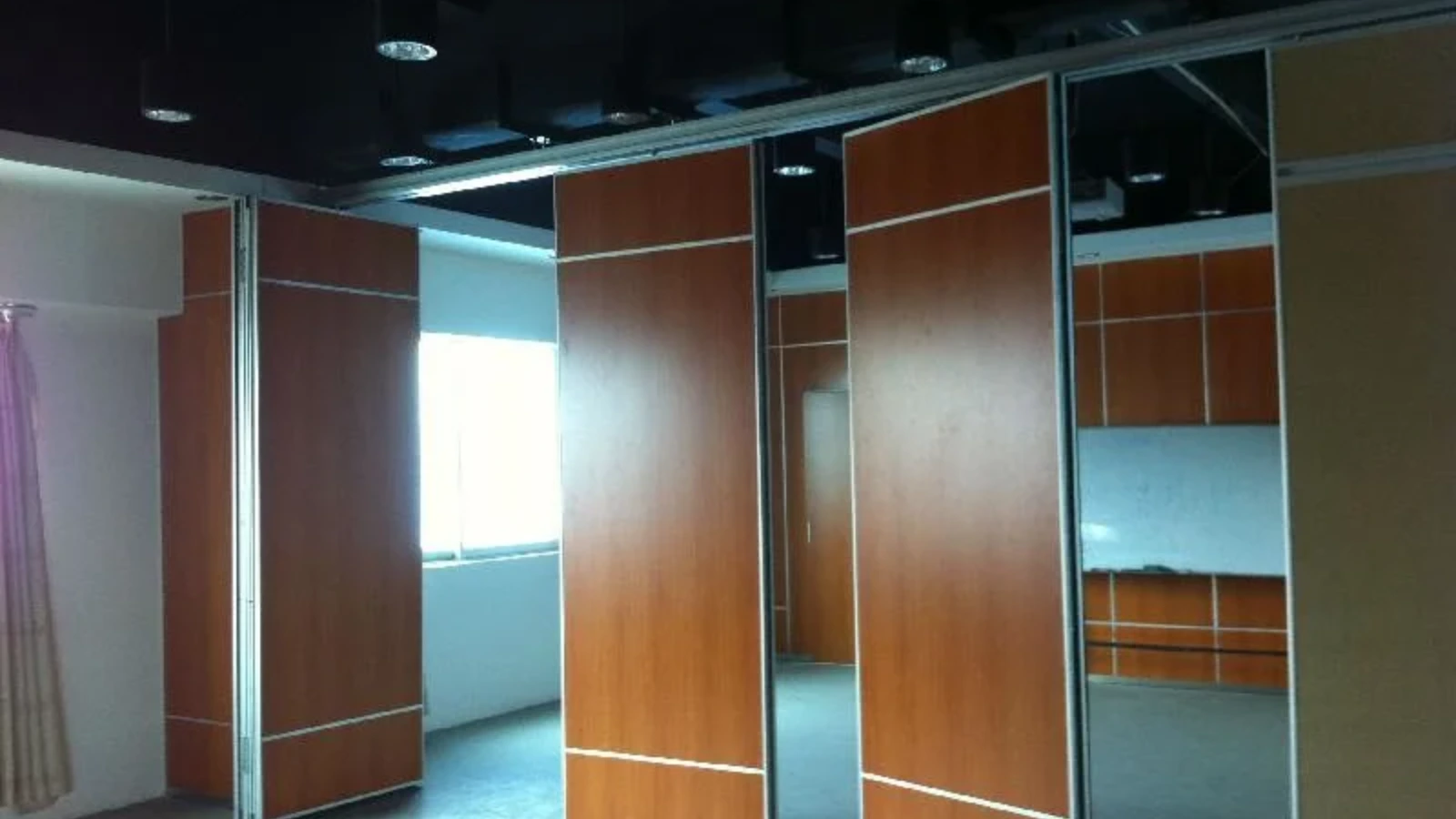
EBUNGE movable partition panels are individually movable and suspended from a top track. They cross the opening without a floor track and park at a planned stacking position. Because the panels hang from above, the track route is the single most important physical reference in the handover file. A clear record of that route helps future teams understand how the system was intended to move.
The record should distinguish between the straight run, any turning section and the final parking area. These are not abstract categories. They describe how the panels travel from the closed position to the stored position. If the handover file only says “track installed,” it leaves too much to memory.
Core Items to Capture in the Handover File
Coordination scope: acoustic partition wall track handover.
A useful handover file is specific about what was reviewed and what remains open. The following checklist covers the minimum categories that project teams should discuss with their supplier or installer.
- Track route drawing showing the straight, turning and stacking paths as reviewed from the layout.
- Parking position and the space reserved for stacked panels.
- Panel finish schedule, including laminate, melamine, fabric, leather, glass or other approved surfaces.
- Pass-door location and any related framing or clearance notes.
- Confirmation of which items still require project-specific support, acoustic or dimensional review.
- Contact details for the party responsible for future coordination.
Each item should be traceable to a drawing, a specification or a written confirmation. Where a value is not confirmed, the record should say so rather than leave a blank that could be misread.

Separating Confirmed Facts from Project-Specific Requirements
Checklist focus: acoustic partition wall track handover.
The suitability of each route and parking arrangement depends on the approved layout, circulation, ceiling interfaces and operating sequence. For example, the fact that panels are top-hung and move without a continuous floor track is a product characteristic.
This distinction matters because a handover file is often read by people who were not present during design. If the file mixes general product information with unverified project assumptions, later readers may treat an assumption as a confirmed condition.
An evidence note for reviewers
Do not infer acoustic, structural or dimensional performance from a drawing, a finish sample or a photograph. Those items require matching project-specific evidence and should be confirmed with the responsible technical party.
Recording the Movement Path Without Overstating It
The movement path should be described as reviewed from the layout. The exact route, junction arrangement, continuous overhead path and parking position must be confirmed from the coordinated project drawings.
Where the design includes a turning section, the record should note that the overhead route is continuous and connected. Where the design parks panels in a compact stack, the record should note that the parking style was customized to the layout and project requirements. These statements describe the design intent without claiming a performance result.
Finish Schedules and Visible Evidence Limits
Finish options include laminate, melamine, fabric, leather, glass and other approved surfaces. The handover file should list the finishes actually supplied and identify the approved surface for each panel group. This helps future teams match replacements or repairs without guessing.
A finish sample or photograph is visible evidence of appearance only. Those topics require separate project-specific confirmation. The handover record should therefore avoid treating a finish image as proof of any hidden property.
Acoustic Concepts and the Limits of Documentation
These are rating systems used to describe sound transmission performance in defined test conditions.
Seals and acoustic concepts can be described generically in the handover file, but the actual performance of an installed system depends on the project-specific assembly, the supporting structure and the quality of the installation. The handover record should point to the project’s acoustic documentation rather than restate a rating as a guarantee.
Pass-Doors, Coordination and Future Modifications
Pass-door requirements can be discussed with the supplier and should be recorded where they affect the track layout or the parking position. A pass-door may change how panels are sequenced or where the stack is located, so it belongs in the same coordination file as the track route.
The exact overhead route and support arrangement must be confirmed by the responsible project team from coordinated drawings. The handover record should make that review possible by preserving the original design references.
Frequently Asked Questions
What is the most important item in acoustic partition wall track handover records?
The overhead route drawing is usually the most important item because it shows the straight, turning and stacking paths as reviewed from the layout. Without it, later teams may not know how the panels were intended to move or where they were meant to park.
Should the handover file include acoustic ratings?
It can reference the project’s acoustic documentation, but it should not present a rating as a guarantee for every condition.
How should finishes be recorded?
List the finishes actually supplied, such as laminate, melamine, fabric, leather, glass or other approved surfaces, and identify which panel groups use them.
What should be done if a value is not confirmed?
The record should state that the item requires project-specific confirmation rather than leaving it blank or implying a default.
Can pass-doors be included in the same handover file?
Yes. Pass-door requirements can be discussed and recorded alongside the track route and parking position. If a pass-door affects panel sequencing or stacking, that relationship should be noted in the coordination file.
Who should receive the completed handover records?
The owner, facility team and any party responsible for future modifications should receive the records. The file should also identify the coordination contacts so that later questions can be directed to the appropriate technical party.
Conclusion: A Record That Supports Better Decisions
Acoustic partition wall track handover records are most useful when they separate confirmed product facts from project-specific requirements. They should describe the overhead route, the parking position and the finish schedule without implying performance that has not been verified. They should also make clear which items still require support, acoustic or dimensional confirmation.
If your project team is preparing handover documentation or reviewing a track layout, the next step is to confirm the project-specific requirements with the responsible technical party. You can contact us to discuss pass-door requirements, project documentation and coordination questions. For broader system context, review the acoustic partition wall range or explore flexible space solutions. When you are ready to define scope, you can request a quote.