
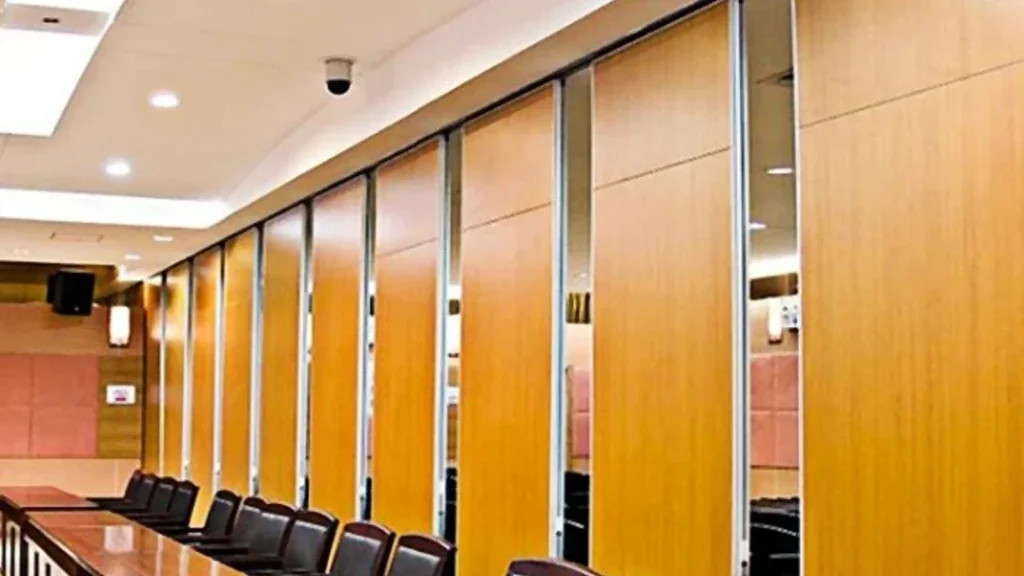
Quick answer: acoustic partition head detail
Review focus: acoustic partition head detail.
An acoustic partition head detail is the interface where a top-hung movable wall meets the ceiling structure. It is also the detail most likely to be ruled out by ceiling deflection. When the slab or roof above a flexible room moves under load, the head condition drawn on a standard partition sheet may no longer suit the project. This article explains the coordination checks, drawing evidence and confirmation boundaries that overseas contractors, architects and interior designers should complete before the top track is fixed.
Why Ceiling Deflection Changes the Head Condition
Project review term: acoustic partition head detail.
The suitability of each route and parking arrangement depends on the approved layout, circulation, ceiling interfaces and operating sequence. It can occur in concrete slabs, steel framing, roof structures and long-span ceilings. A movable partition hangs from a top track, and the panels travel below that track without a continuous floor track along the partition line. If the supporting structure moves, the relationship between the track, the panel head and the finished ceiling can change.
This does not automatically mean a project cannot use a movable wall. The review is a coordination task, not a performance promise.
What the Head Detail Must Coordinate
Coordination scope: acoustic partition head detail.
The head detail sits between several trades and several drawing sets. A useful review brings those inputs together before fabrication or installation planning advances.
Structural movement and support
Confirm how the supporting structure is expected to behave and who is responsible for that information.
Finished ceiling and track zone
The finished ceiling plane, the track zone and the panel head must be coordinated so the partition can operate as intended. A ceiling that is not flat, or a track zone that conflicts with services, can affect the head condition even when the structure itself is stable.
Acoustic intent
The head detail is one part of the system, and its contribution depends on the full assembly and the project-specific design.
Information to Collect Before Drawing the Head
Checklist focus: acoustic partition head detail.
Early information reduces the risk of redesign later. The following checklist is a coordination tool, not a substitute for project-specific engineering.
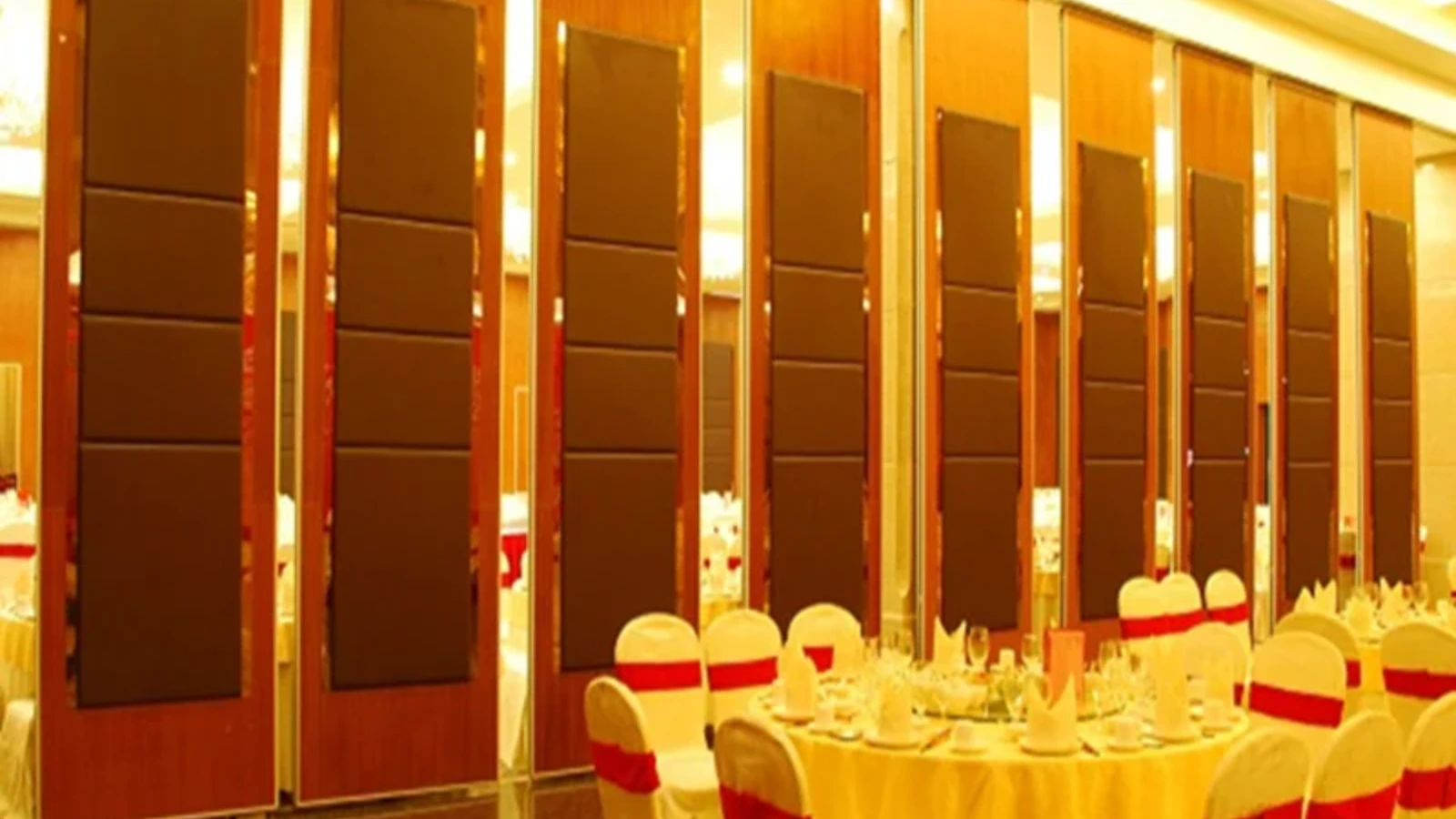
- Reflected ceiling plans, service routes and ceiling finish details.
- The exact route, junction arrangement, continuous overhead path and parking position must be confirmed from the coordinated project drawings.
- Opening width, clear height and any pass-door requirements.
- Finish direction for laminate, melamine, fabric, leather, glass or other approved surfaces.
- Acoustic intent stated as a project requirement, with the responsible specifier named.
A Step-by-Step Coordination Process
Use a sequence that keeps the head detail tied to evidence rather than assumption.
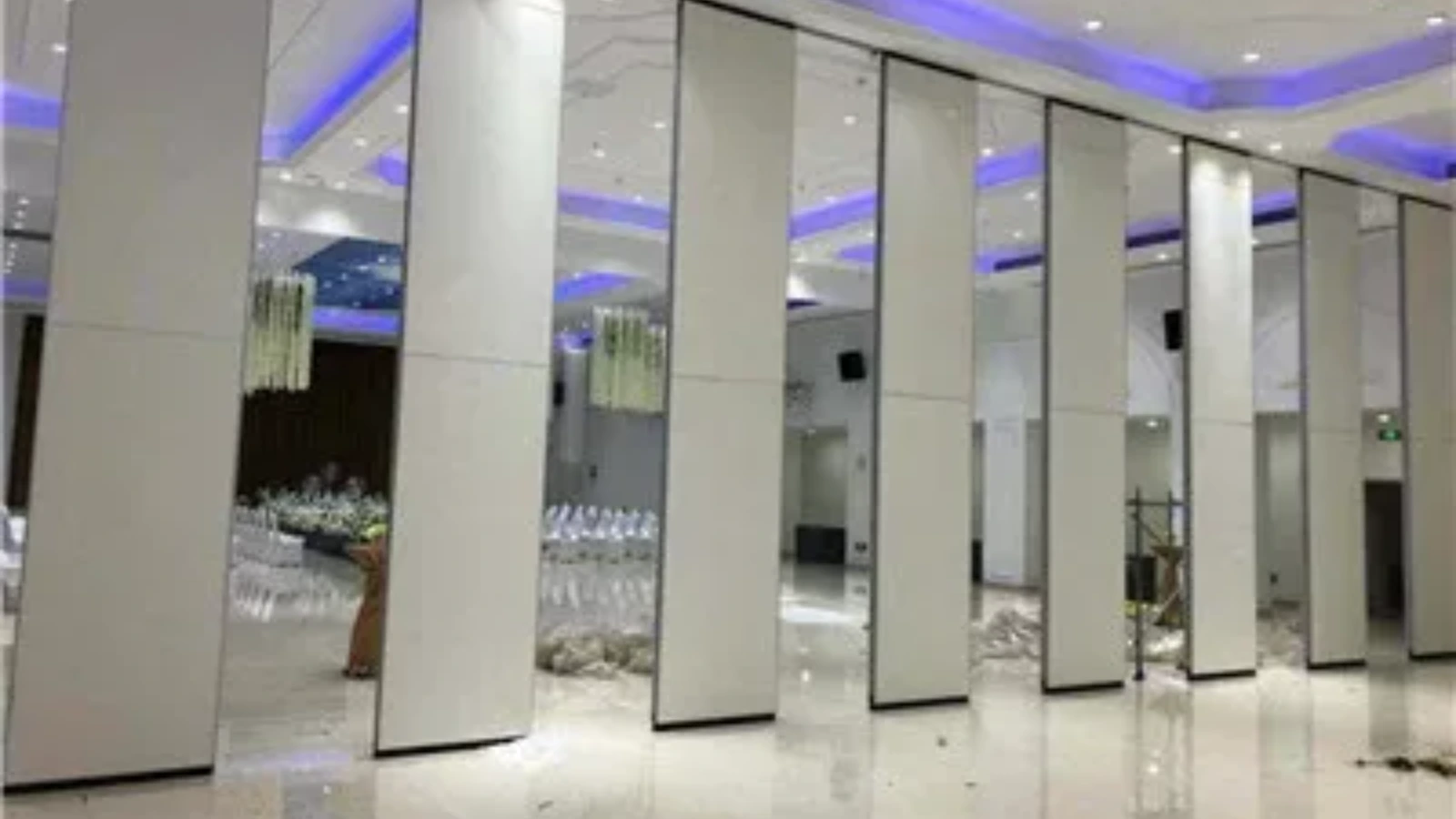
- Review the straight, turning and stacking routes against the available overhead route.
- The exact overhead route and support arrangement must be confirmed by the responsible project team from coordinated drawings.
- Confirm the finish selection and any pass-door requirements.
- Record open items as questions with a named responsible party.
Every proposed movement path requires a continuous connected overhead route and project-specific support review.
Evidence Boundaries for the Head Detail
Drawings and photographs show geometry and finish. Treat visible evidence as a starting point for questions, not as a conclusion.
Evidence note: a head detail drawing can show the intended interface, but it does not by itself confirm deflection limits, support capacity or acoustic results. Those items require matching project evidence and the responsible discipline’s confirmation.
Where a statement is comparative, absolute or causal, it needs corresponding evidence. If that evidence is not available, the correct action is to state the confirmation boundary rather than infer a result.
Common Coordination Mistakes
Most head detail problems appear before installation. They usually come from missing information rather than from the partition concept itself.
Copying a standard detail
A detail copied from another project may not match the current structure, ceiling zone or acoustic requirement. Reuse only after review.
Confirming acoustics from a finish sample
A laminate, melamine, fabric, leather or glass sample shows appearance.
Documentation to Request and Keep
Good documentation makes the head detail reviewable. It also helps the project team answer questions later without relying on memory.
| Item | Purpose | Responsible party |
|---|---|---|
| Structural deflection criteria | Defines movement context | Structural engineer |
| Ceiling and service coordination drawing | Shows the track zone | Architect or ceiling contractor |
| Partition layout with routes | Shows straight, turning and stacking paths | Design team |
| Finish schedule | Records approved surfaces | Interior designer |
| Acoustic requirement statement | States project intent | Specifier |
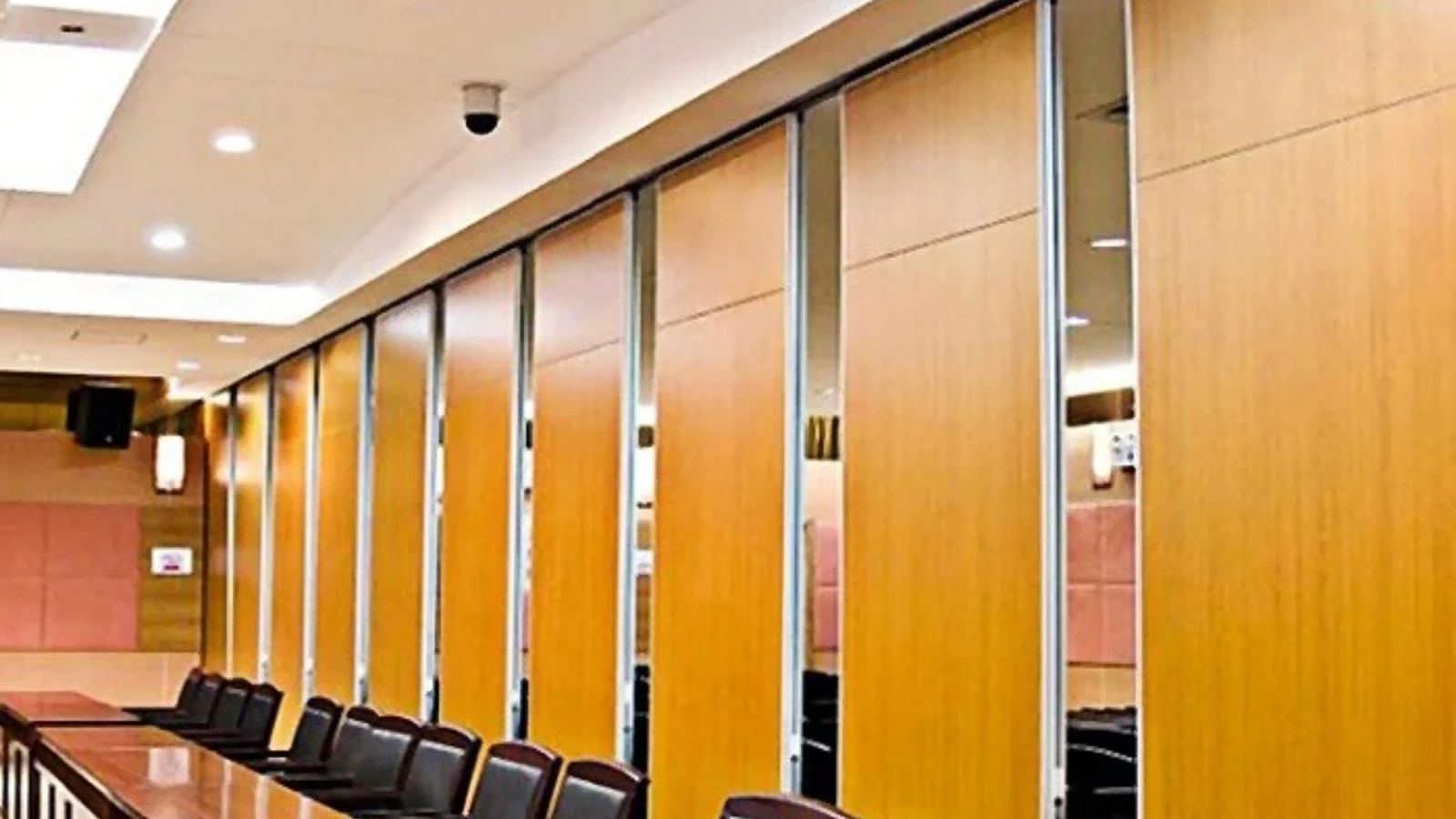
Project documentation and pass-door requirements can be discussed with EBUNGE. Confirm project-specific support, acoustic and dimensional requirements before finalising the head detail.
Frequently Asked Questions
Can a movable partition still be used when ceiling deflection is present?
Confirm support, movement and dimensional requirements with the responsible disciplines before proceeding.
Does EBUNGE confirm deflection limits for my project?
No. EBUNGE can discuss the partition interface and documentation requirements.
Does the head detail alone determine acoustic performance?
No.
What layout information is needed for the head review?
Provide the partition layout showing straight runs, turning routes and the planned stacking position, together with opening width, clear height and any pass-door requirements.
Which finishes can be considered?
Confirmed finish options include laminate, melamine, fabric, leather, glass and other approved surfaces.
When should the head detail be finalised?
Early coordination reduces the risk of redesign during installation planning.
Conclusion and Next Step
Ceiling deflection does not automatically rule out a movable wall, but it does rule out an unexamined acoustic partition head detail. Confirm project-specific support, acoustic and dimensional requirements before fixing the top track.
To review your layout, finishes and head detail requirements, contact the EBUNGE team. You can also explore the acoustic partition wall range, review flexible space solutions, or request a quote for your project.