
Quick project answer
Review focus: partition tender return.
Partition tender return benchmarking becomes difficult when each bidder describes scope in a different way. One return may list panel quantities, another may focus on finish samples, and a third may bundle coordination tasks under a single line. For overseas contractors, architects, interior designers, owners and renovation teams, the goal is not to force identical wording but to compare like with like. This guide provides an evidence-bounded framework for partition tender return benchmarking when scope descriptions differ. It does not replace project-specific drawing review, acoustic confirmation or commercial negotiation.
Why Scope Descriptions Diverge in Partition Tenders
Project review term: partition tender return.
Scope descriptions diverge for predictable reasons. Bidders may use different trade breakdowns, assume different levels of site coordination, or describe finishes in generic terms. A return that mentions laminate, melamine, fabric, leather or glass may not explain how those surfaces relate to the opening, stacking position or adjacent construction.
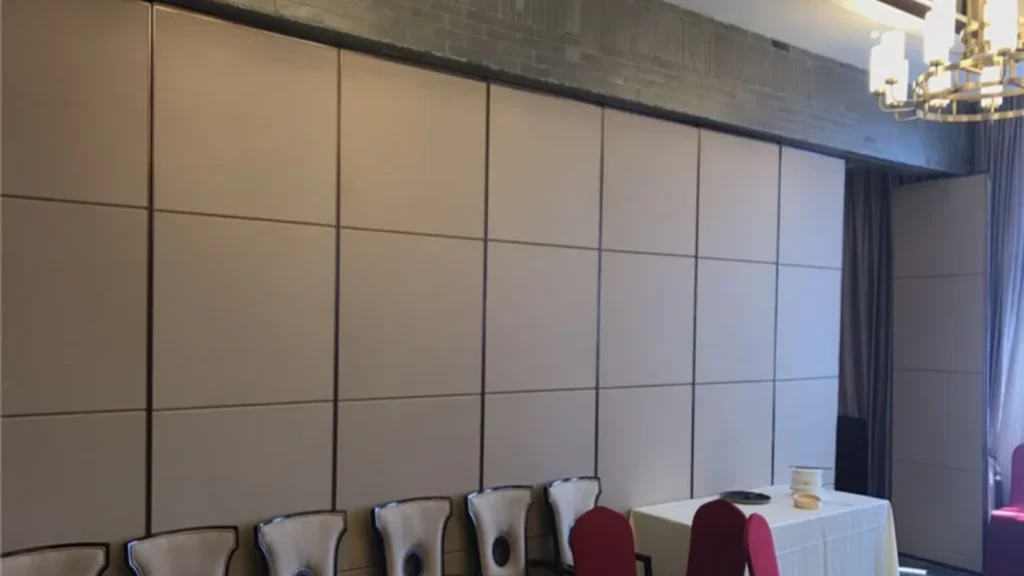
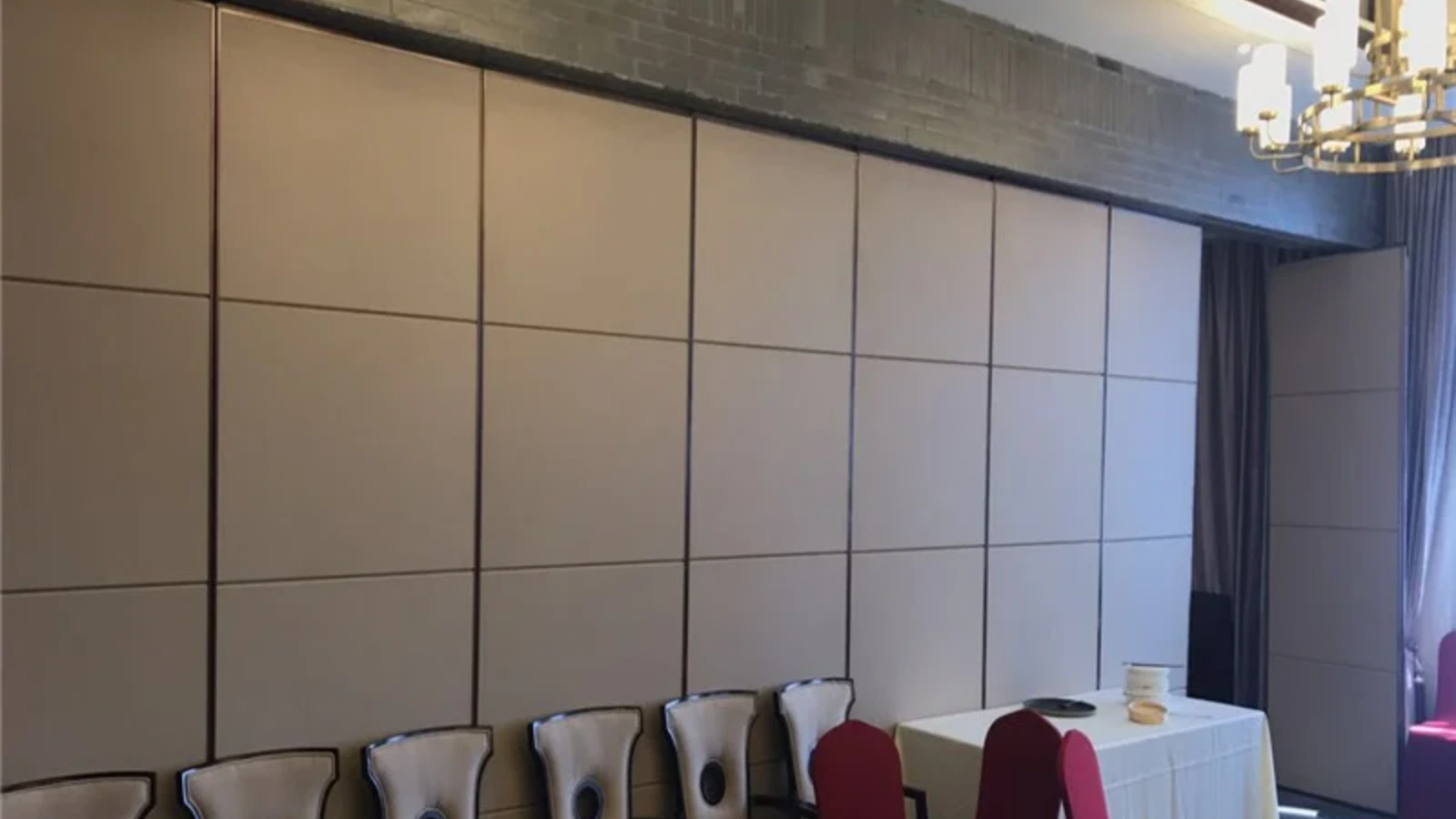
Another common difference is the treatment of movement routes. EBUNGE movable wall panels are individually movable, suspended from a top track, cross the opening without a floor track, and park at a planned stacking position. If a tender return does not describe the straight, turning and stacking routes, the comparison becomes incomplete. The layout review should identify these routes before returns are scored.
Separate Product Scope from Coordination Scope
Product scope covers panels, finishes, top track and parking arrangement. Coordination scope covers interfaces with structure, ceilings, adjacent finishes and site sequencing. When these are mixed, a lower-looking return may simply exclude coordination items that another bidder has included.
A Decision Checklist for Comparing Returns
Use a structured checklist before ranking any return. The checklist below is a comparison aid, not a substitute for project-specific support, acoustic and dimensional confirmation.
- Does the return describe the opening width, height and any turning or stacking route?
- Are finish options named using the same categories, such as laminate, melamine, fabric, leather or glass?
- Is the parking position described in relation to the planned stacking area?
- Are pass-door requirements mentioned where the project needs them?
- Does the return identify what project documentation will be provided?
- Are exclusions stated clearly rather than left implicit?
- Does the return avoid unsupported performance claims?
Build a Normalized Comparison Table
A normalized table helps teams compare returns without pretending that different scope descriptions are identical. The table should record what each return actually states, not what the reviewer assumes.
| Comparison line | What to record | Evidence boundary |
|---|---|---|
| Movement route | Straight, turning and stacking routes as described | Confirm against layout drawings |
| Finish schedule | Named finish categories such as laminate, melamine, fabric, leather or glass | Confirm approved surfaces per project |
| Parking arrangement | Planned stacking position and clearance described | Confirm with project-specific review |
| Pass-door needs | Whether pass-door requirements are addressed | Confirm with project documentation |
| Documentation | Drawings, schedules or submittals referenced | Confirm scope of supplied documents |
Numbered Process for Evidence-Bounded Benchmarking
- Collect all tender returns and separate product scope from coordination scope.
- Map each return against the same opening, route and stacking questions.
- Mark every statement that lacks a drawing, schedule or written clarification.
- Request missing information in writing before scoring.
- Compare only confirmed items and flag assumptions for later review.
- Document the final comparison basis for internal approval.
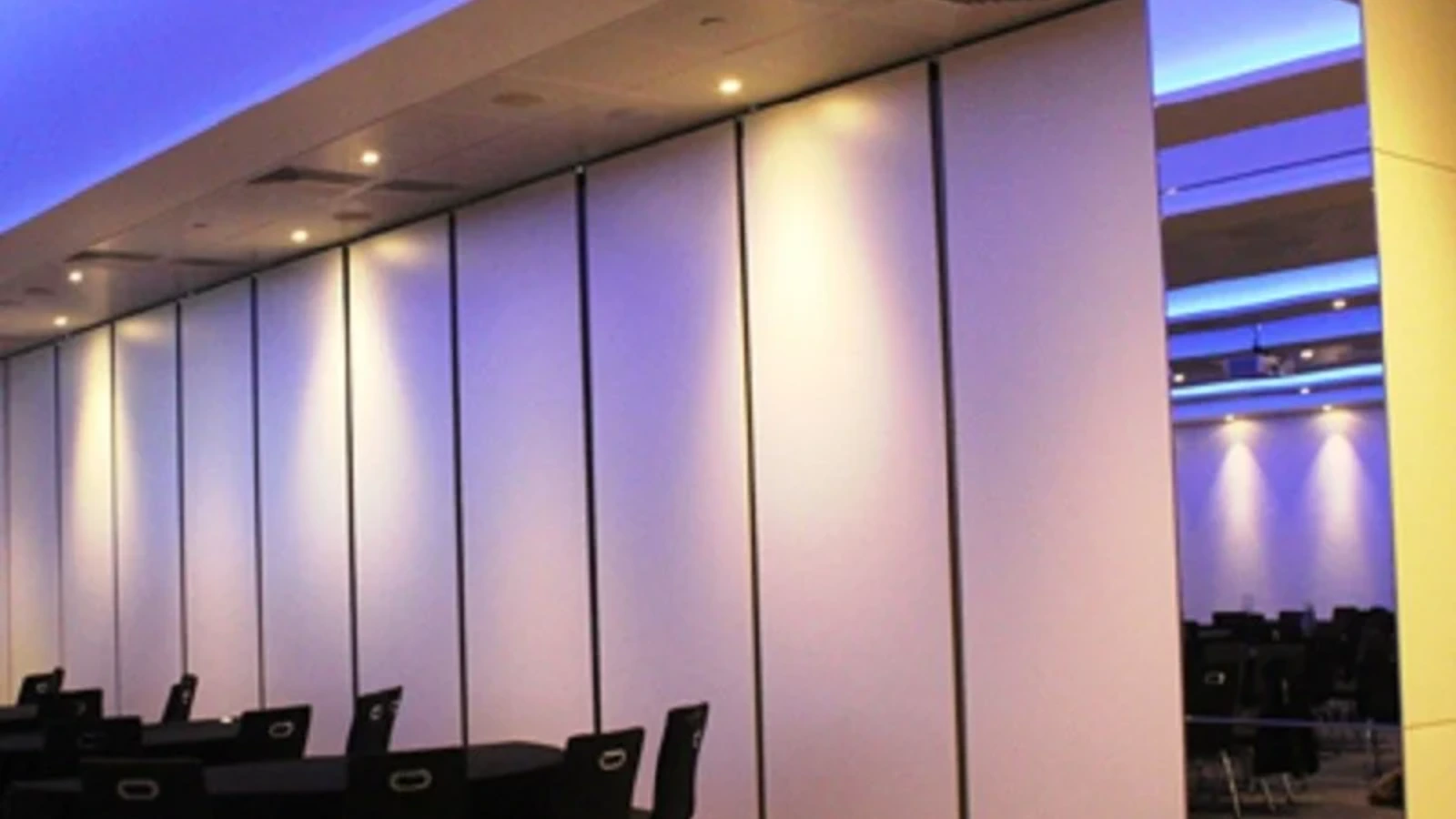
This process keeps partition tender return benchmarking project planning grounded in visible evidence. The suitability of each route and parking arrangement depends on the approved layout, circulation, ceiling interfaces and operating sequence.
Acoustic and Performance Language: What to Confirm
Visible references can support layout discussion but do not verify hidden construction or performance. Comparative or absolute statements require corresponding evidence. Where evidence is not available, state the confirmation boundary instead of filling the gap with an assumption.
Coordinate Support and Dimensional Review
Every proposed movement path requires a continuous connected overhead route and project-specific support review. The exact route, junction arrangement, continuous overhead path and parking position must be confirmed from the coordinated project drawings. Dimensional requirements, support conditions and interface details should be confirmed against the project drawings before any return is treated as complete.
Documentation and Clarification Questions
Project documentation can be discussed with the supplier during tender review. Useful clarification questions include: which drawings define the opening and stacking area; how finishes are scheduled; whether pass-door requirements are included; and what submittals will accompany the order.
Keep clarification requests specific. A question such as “please confirm the parking arrangement shown on the layout” is more useful than a general request for “full details.” Specific questions produce comparable answers and make partition tender return benchmarking specification review more consistent.
Common Benchmarking Mistakes to Avoid
One mistake is comparing total line counts rather than scope coverage. Another is assuming that a named finish implies a particular performance level. A third is ignoring the difference between a described route and a reviewed route.
Teams should also avoid treating a planning example as a application reference reference. Named venues and room types are examples only; movable partitions can be considered wherever flexible spatial division, combination or reconfiguration is required. Each application still needs its own support, acoustic and dimensional confirmation.
FAQ: Partition Tender Return Benchmarking
What is partition tender return benchmarking?
It is the structured comparison of tender returns for movable partition scope. The aim is to compare like with like when bidders describe scope differently, using drawings, schedules and written clarifications.
How do I compare returns when scope descriptions differ?
Normalize the returns against the same questions: opening size, movement route, parking position, finish categories, pass-door needs and documentation. Record what each return states and flag missing evidence for clarification.
Can I rely on a finish name to judge performance?
No. A finish category such as laminate, melamine, fabric, leather or glass describes an approved surface option. It does not by itself confirm acoustic, fire, durability or cleaning performance. Those require project-specific evidence.
What does STC or Rw mean in a tender return?
Confirm the exact test basis and project requirement.
Do movable partitions need a floor track?
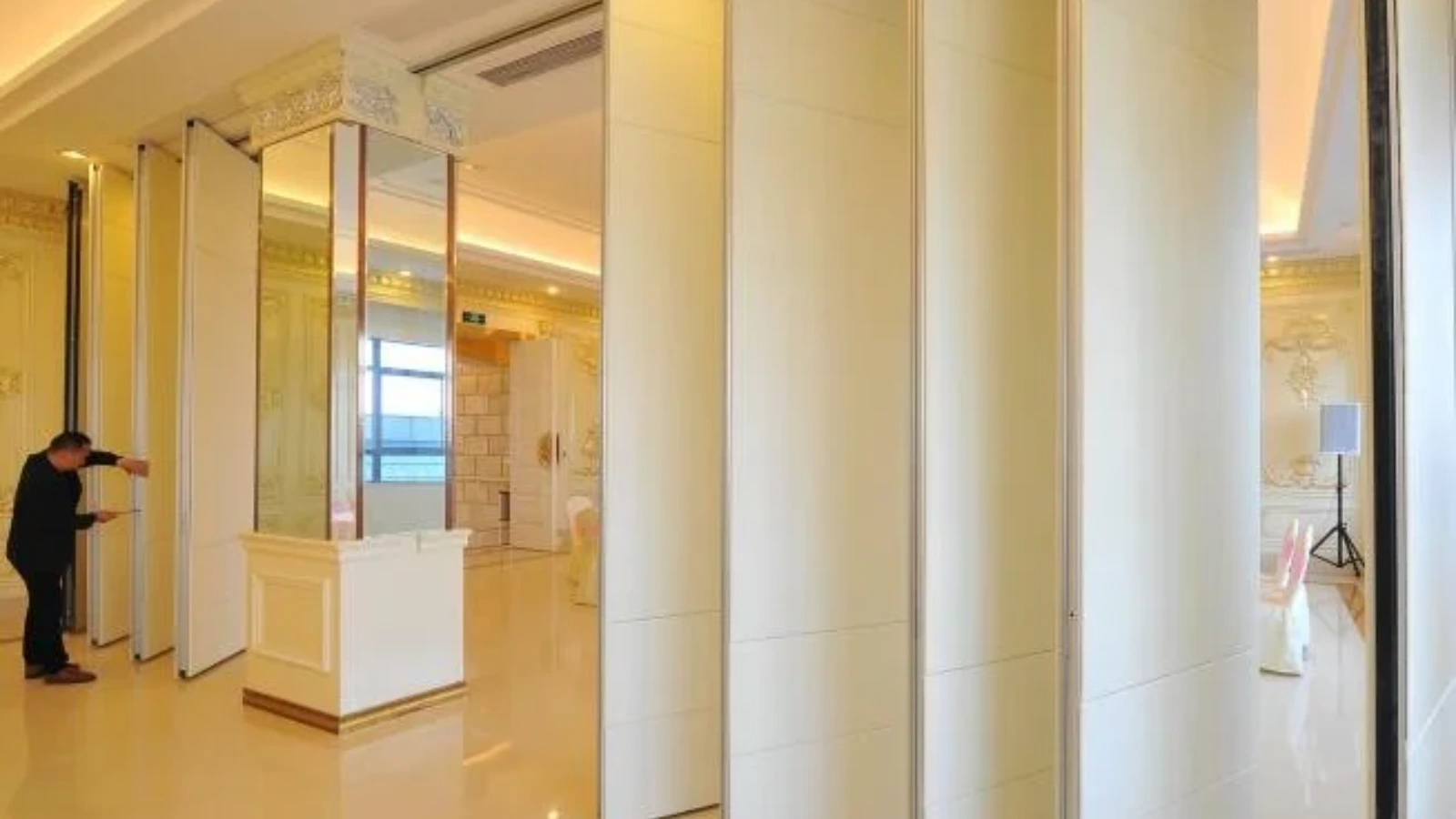
EBUNGE movable wall panels are top-hung and cross the opening without a floor track. The straight, turning and stacking routes are reviewed from the layout, and every proposed movement path requires a continuous connected overhead route and project-specific support review.
When should I request clarification?
Request clarification before scoring any return that lacks a drawing, schedule or written statement for a required item.
Conclusion and Next Step
Separate product scope from coordination scope, normalize returns against the same questions, and mark every assumption for review. Confirm project-specific support, acoustic and dimensional requirements before making a final decision.
To discuss pass-door requirements, finish options or project documentation for your layout, contact our team. You can also review the movable partition walls range, explore flexible space solutions, or request a quote for your project.