

Quick answer: partition tender clarification log
Review focus: partition tender clarification log.
A partition tender clarification log is a controlled record of every question, answer, assumption, and evidence gap that appears between tender issue and award. For overseas contractors, architects, and procurement teams, the log prevents verbal agreements from disappearing and keeps the final scope tied to reviewed drawings. It is not a substitute for project-specific engineering, acoustic, or dimensional confirmation. It is a discipline that makes those confirmations visible before anyone signs.
This guide explains how to structure the log, what to track, and where to stop. It uses EBUNGE movable partition walls as a working example, but the method applies to any flexible-space package where panels are top-hung, individually movable, and parked at a planned stacking position.
Why a Clarification Log Matters Before Award
Project review term: partition tender clarification log.
Tender documents rarely answer every coordination question. The exact route, junction arrangement, continuous overhead path and parking position must be confirmed from the coordinated project drawings. Without a log, those gaps are resolved by memory or email threads. With a log, each item has an owner, a status, and a stated evidence boundary.
Visible references can support layout discussion but do not verify hidden construction or performance. Those properties require matching project evidence, not inference from appearance.
What to Record in the Log
Coordination scope: partition tender clarification log.
Start with a simple register. Every entry should include a unique number, the date raised, the party responsible, the current status, and the exact wording of the question. Avoid paraphrasing answers; paste them verbatim or attach the source document.
Core fields for each entry
- The suitability of each route and parking arrangement depends on the approved layout, circulation, ceiling interfaces and operating sequence.
- Topic: layout, finish, support, acoustics, documentation, or commercial.
- Question: one clear question per line.
- Answer: the response received, with date and author.
- Evidence attached: drawing number, specification clause, or sample reference.
- Status: open, answered, pending confirmation, or closed.
- Owner: the person accountable for closing the item.
Keep the log in a shared file that all evaluators can read. A log that lives on one person’s laptop is not a coordination tool.
Drawing Review and Route Confirmation
Checklist focus: partition tender clarification log.
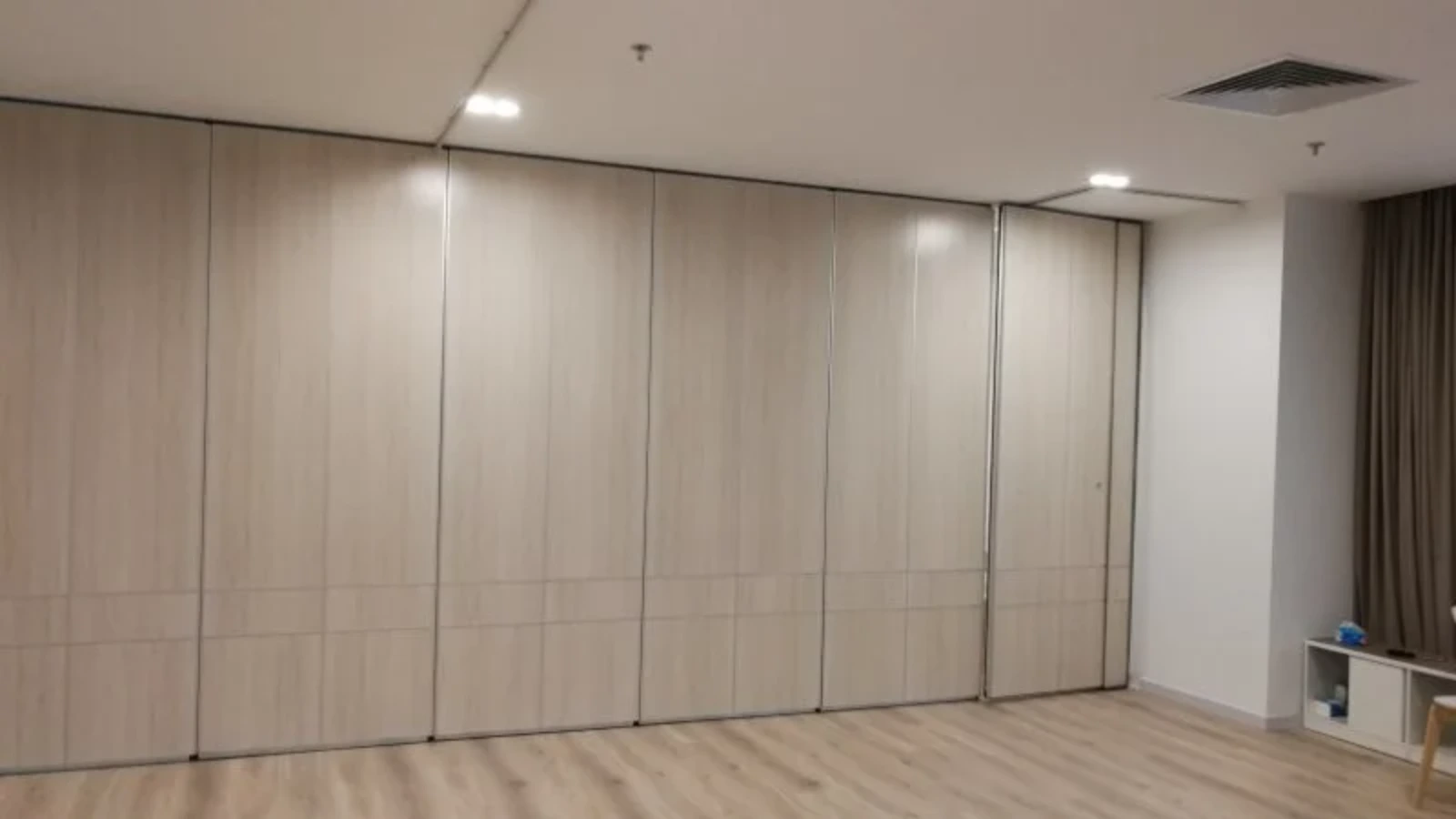
Movable partition panels are suspended from a top track and cross the opening without a floor track. Straight, turning, and stacking routes must be reviewed from the layout. The log should capture whether the proposed route is continuous and connected overhead, and whether the supporting structure has been confirmed for the project.
Every movement path requires a continuous connected overhead route and project-specific support review. If the drawing shows a gap, log it as an open item and request a revised layout.
Questions to log for every route
- Is the overhead route continuous across the full opening and into the parking area?
- Has the structural support been reviewed for the project conditions?
- Does the parking position match the planned stacking layout?
- Are turning points shown clearly on the drawing?
- Has the ceiling interface been coordinated with other trades?
Finish Approvals and Sample Control
Review focus: partition tender clarification log.
Confirmed finish options include laminate, melamine, fabric, leather, glass, and other approved surfaces. The log should record which finish is proposed for each panel face, whether a physical sample has been approved, and whether the sample reference is attached.
Those are separate questions. If a stakeholder asks whether a fabric finish will meet a specific acoustic target, log the question and request project-specific evidence rather than inferring from the finish name.
Finish approval checklist
- Finish type and reference number recorded.
- Physical sample approved and stored.
- Edge detail and panel size confirmed against the layout.
- Any special surface requirement noted with its evidence source.
- Approval date and approver name entered.
Acoustic and Performance Boundaries
The log should record the required rating, the evidence provided, and the boundary of that evidence.
If the tender asks for a rating, the response should reference a test report or a project-specific assessment. If no such evidence is available, the item remains open. Do not close an acoustic item because a similar product was used elsewhere.
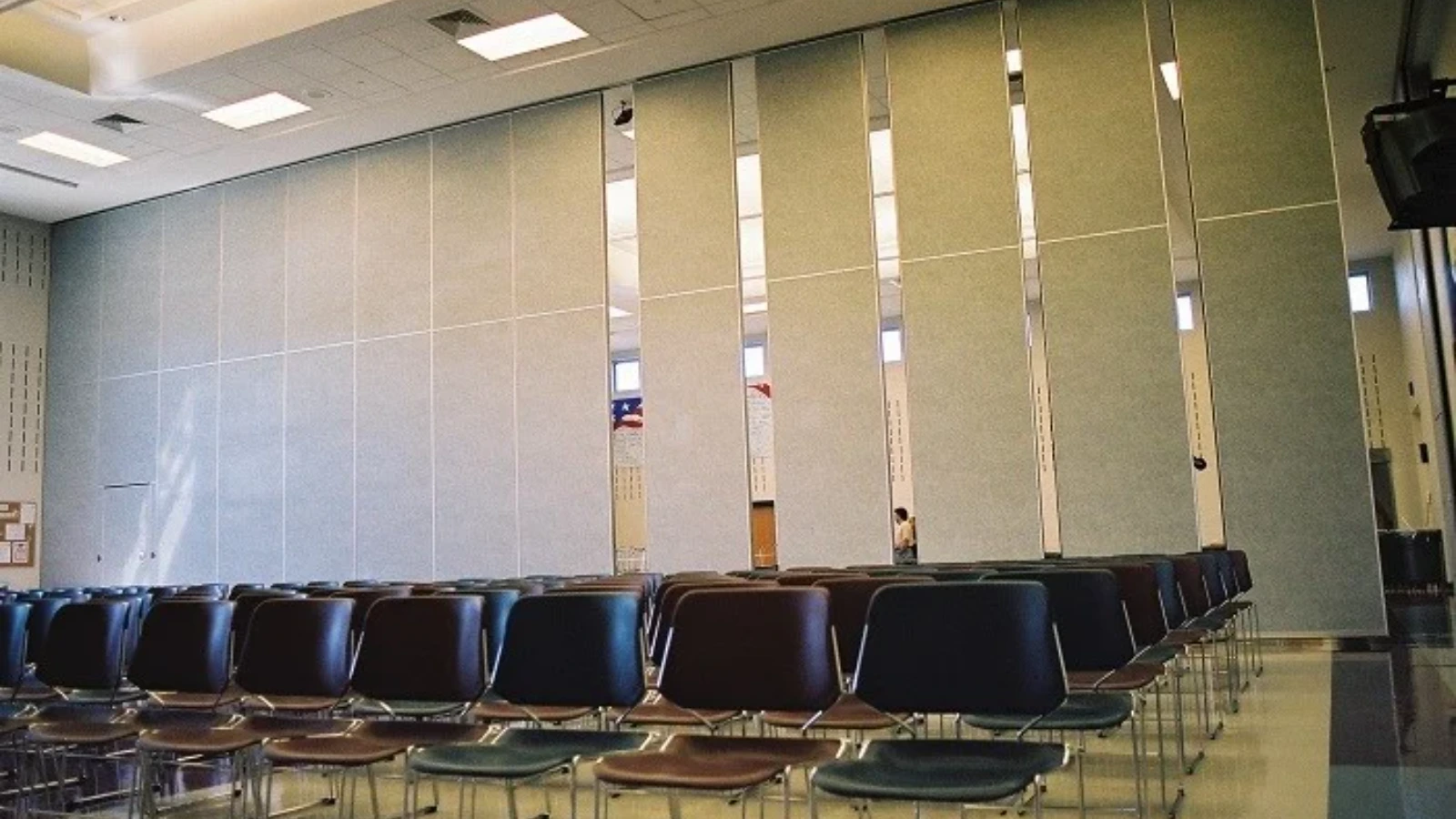
Evidence note: A visible finish, a photograph, or a generic drawing does not prove acoustic, fire, durability, or load performance. Each of those claims requires matching project evidence before it can be treated as confirmed.
Pass-Doors, Documentation, and Coordination
Pass-door requirements and project documentation can be discussed with the supplier. The log should capture whether a pass-door is required, where it is located, and what documentation is needed for approval. This is also the place to record submittal dates, sample delivery, and any coordination meetings.
Procurement and tender review coordination improves when the log is reviewed in a weekly call. Assign one person to update statuses and flag items that have been open for more than one review cycle.
Weekly log review agenda
- Confirm closed items and remove them from the active list.
- Review open items by owner and due date.
- Identify any new evidence received.
- Escalate items that block award.
- Update the drawing register with the latest revision.
Common Pitfalls to Avoid
One common mistake is treating a clarification log as a complaint list. It is a decision record. Another is allowing answers to live in email without being copied into the log. A third is closing an item because someone said it would be fine, without attaching evidence.
Keep the log factual. If a question cannot be answered with available evidence, mark it as pending and state what is needed. That is more useful than a premature closure.
FAQ
What is a partition tender clarification log?
It is a structured register that records every question, answer, assumption, and evidence gap raised during the tender period before award. It keeps the final scope tied to reviewed documents.
Who should own the log?
The procurement lead or a designated coordinator should own the log, but every evaluator should be able to read and contribute. One owner ensures statuses are updated consistently.
How detailed should each entry be?
Each entry should contain one clear question, the verbatim answer, the evidence attached, the owner, and the status. Avoid combining multiple questions in one line.
Can the log replace project-specific confirmation?
No. The log records what has been confirmed and what remains open.
When should the log be closed?
Close the log only when all award-blocking items are resolved or formally accepted as pending with a clear path to resolution. Keep the final version with the contract documents.
How does the log handle finish samples?
Record the finish type, reference number, approval date, and approver. A finish approval does not confirm performance; keep performance questions separate.
Conclusion and Next Steps
Cost and maintenance requirements depend on the selected configuration, finish and project conditions and require project-specific confirmation. It keeps drawing reviews, finish approvals, and evidence boundaries visible before award. Start with a shared register, assign one owner, and review it weekly. Confirm project-specific support, acoustic, and dimensional requirements with the supplier before finalizing the order.
To discuss pass-door requirements, documentation, or project-specific configuration, contact our team. You can also review our movable partition walls and solutions pages, or request a quote with your layout drawings.