

Quick answer: partition handover index
Review focus: partition handover index.
A partition handover index is a working register that links each movable wall item to its drawing, finish approval, route review, and open question before final inspection. For overseas contractors, architects, designers, owners, and renovation teams, the index is not a substitute for inspection. It is a coordination tool that keeps evidence visible and prevents unsupported assumptions from entering the handover pack.
What the Index Should Contain
Project review term: partition handover index.
Start with the confirmed product context. EBUNGE movable partition panels are individually movable, suspended from a top track, cross the opening without a floor track, and park at a planned stacking position. The index should record how those facts appear in the project layout, not infer hidden performance from a drawing or finish sample.
Each line item can reference the panel location, the approved finish option, the planned movement route, and the responsible reviewer. Confirmed finish options include laminate, melamine, fabric, leather, glass, and other approved surfaces. The index does not need to explain panel construction or seal materials, because those details require project-specific confirmation.
Define the Evidence Boundary First
Coordination scope: partition handover index.
Before adding rows, agree on what the index can and cannot prove. Visible references can support layout discussion but do not verify hidden construction or performance. The index should separate confirmed facts from items awaiting project-specific evidence.
The suitability of each route and parking arrangement depends on the approved layout, circulation, ceiling interfaces and operating sequence. Where acoustic requirements matter, record the requirement source and the need for project-specific confirmation rather than a performance promise.
Evidence note: The index is a coordination record. It does not replace project-specific support, acoustic, dimensional, or code review by qualified professionals.
Map Straight, Turning, and Stacking Routes
Checklist focus: partition handover index.
Route review is one of the most useful parts of the index. Straight, turning, and stacking routes are reviewed from the layout. Each proposed movement path needs a continuous connected overhead route and project-specific support review. The index should show where the route changes direction, where panels park, and which drawing revision was reviewed.
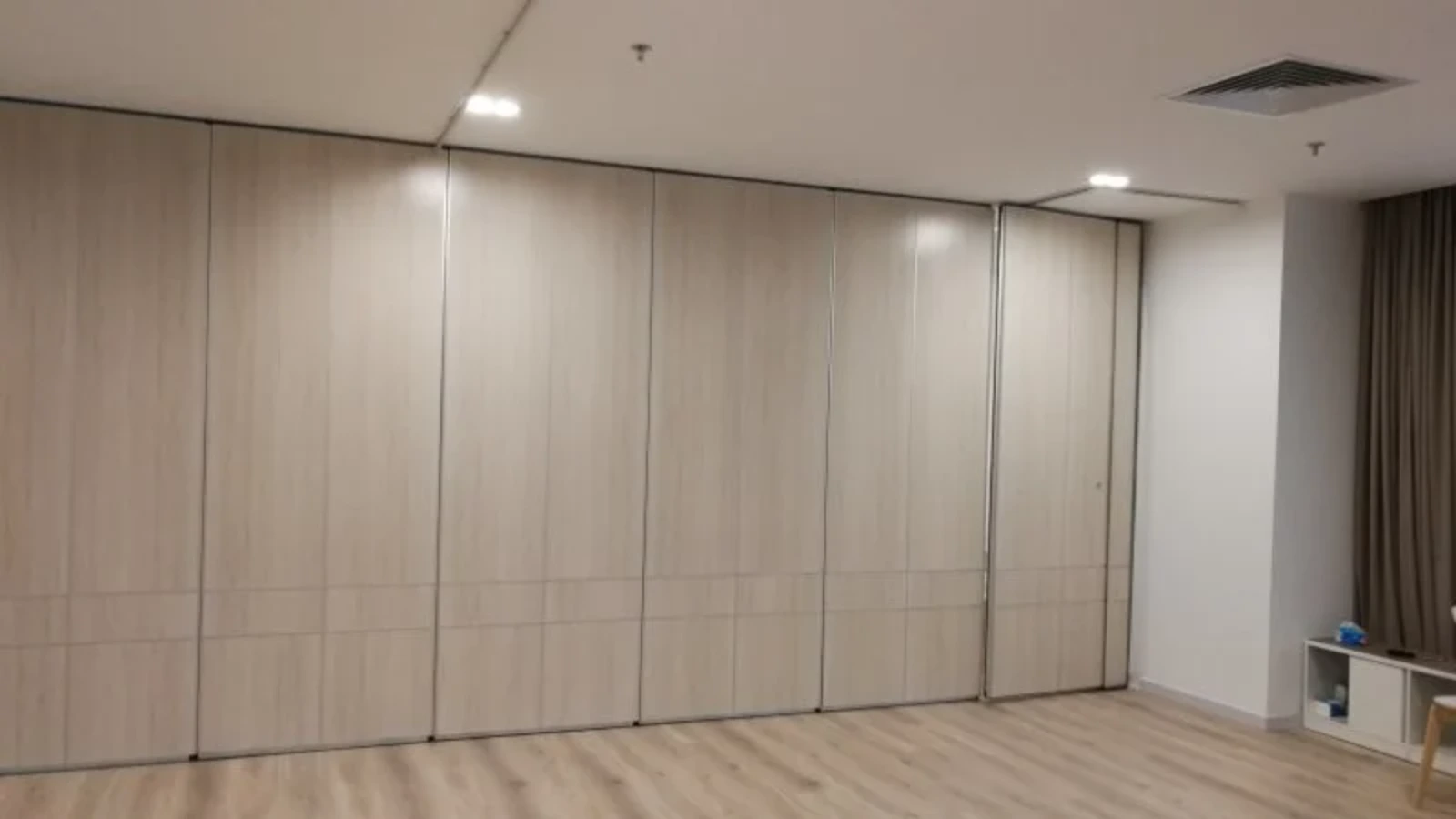
The exact route, junction arrangement, continuous overhead path and parking position must be confirmed from the coordinated project drawings. Parking style is customized to the customer layout and project requirements and may support compact stacking when the coordinated design permits it.
Build the Index as a Numbered Process
- Collect the current layout drawings and finish schedules for each movable wall location.
- List every panel group, opening, and planned stacking position as a separate index row.
- Record the approved finish option and the approval reference for each visible surface.
- Mark straight, turning, and stacking routes, noting any point that needs support or dimensional review.
- Add pass-door requirements and project documentation questions as open items.
- Assign a reviewer and a due date for each unresolved item before final inspection.
This process keeps the index practical. It also gives inspectors a clear trail from drawing to installed condition without requiring the index to answer engineering questions it cannot support.
Coordinate Handover Documentation Across Teams
Handover documentation coordination fails when each team keeps a separate version. The index should be the single register that links architect drawings, contractor submittals, finish approvals, and owner questions. Use consistent row numbers so a comment in a meeting can be traced back to the same item in the inspection pack.
For projects with multiple venues or room types, the named venue is an example only. Movable partitions can be considered wherever flexible spatial division, combination, or reconfiguration is required. The index structure can be repeated across floors or buildings, but each location still needs its own drawing review and project-specific confirmation.
Use a Compact Comparison Table

| Index Item | What to Record | Evidence Limit |
|---|---|---|
| Panel location | Drawing reference and room name | Does not confirm acoustic or fire performance |
| Finish option | Approved surface category and approval date | Does not confirm cleaning compatibility or durability |
| Movement route | Straight, turning, and stacking path from layout | Requires continuous overhead route and support review |
| Parking position | Planned stacking location and clearance notes | Customized to layout; confirm with project team |
| Pass-door need | Requirement noted for discussion | Does not confirm dimensions or hardware without review |
Prepare for Final Inspection Without Overclaiming
Inspectors can verify visible conditions, drawing consistency, and route logic. They cannot verify hidden performance from a visual check, so the index should not present assumptions as facts.
Keep language precise. Instead of promising service life or financial returns, record the maintenance and operational questions that the owner should review with the project team.
Frequently Asked Questions

What is a partition handover index?
It is a working register that links each movable wall item to its drawing, finish approval, route review, and open questions before final inspection. It supports coordination but does not replace project-specific professional review.
Does the index need acoustic test values?
Only if the project specification requires them and matching evidence is available. The index should record the requirement source and the need for project-specific confirmation.
How should routes be documented?
Record straight, turning, and stacking routes from the layout. Each proposed path needs a continuous connected overhead route and project-specific support review.
Can the index include finish samples?
Yes, as approval references. Confirmed finish options include laminate, melamine, fabric, leather, glass, and other approved surfaces. A finish sample does not confirm acoustic, fire, durability, or cleaning performance.
Who should review the index before inspection?
The project team should assign reviewers for drawings, finishes, routes, and open questions. The owner or owner representative should confirm that unresolved items are tracked. Contact EBUNGE to discuss project documentation and pass-door requirements.
Does the index replace a site inspection?
No. It organizes evidence and open items so the inspection can focus on visible conditions and drawing consistency. It does not certify hidden performance or engineering outcomes.
Conclusion and Next Step
Build it early, keep it versioned, and use it to separate what is known from what still needs project-specific review. For movable wall projects, review the movable partition walls range, explore flexible space solutions, and contact EBUNGE to discuss pass-door requirements, project documentation, and drawing review. When your team is ready, request a quote with your layout and finish schedule so the handover index can be aligned with the project scope.