

Quick answer: partition tender document register
Review focus: partition tender document register.
A partition tender document register is the controlled list of drawings, schedules, specifications and clarifications that bidders rely on before bid review. It is not a folder of files. It is a version-controlled index that tells every bidder which document is current, which is superseded and which item still needs project-specific confirmation. The suitability of each route and parking arrangement depends on the approved layout, circulation, ceiling interfaces and operating sequence.
This guide explains how to build and run that register before bid review. It stays within maintained product facts and visible evidence limits. Where a requirement depends on project-specific support, acoustic or dimensional review, the register should say so rather than imply a hidden answer.
Why a Register Matters Before Bid Review
Project review term: partition tender document register.
Bids are usually compared on price, programme and compliance. If bidders receive different drawing revisions or different finish schedules, the comparison is not like-for-like. A register gives each bidder the same baseline and records when that baseline changed.
It also creates an audit trail. When a bidder asks whether a route crosses an opening without a floor track, the register can point to the current layout drawing and the confirmed product fact that panels are top-hung and move without a continuous floor running track along the partition line. It cannot, however, confirm support, acoustic or dimensional outcomes that have not been reviewed for that project.
What the register is not
It is not a substitute for project-specific engineering, acoustic or dimensional review. It is not a place to record assumed test values or unverified commercial terms. Keep those items in a separate clarification log until evidence is available.
Core Documents to Index
Coordination scope: partition tender document register.
Start with the documents that directly affect bid scope. The exact list depends on the project, but most partition tenders will include the following categories.
- Architectural layout drawings showing straight, turning and stacking routes.
- Elevation and opening schedules, including pass-door requirements.
- Finish schedules naming laminate, melamine, fabric, leather, glass or other approved surfaces.
- Acoustic intent notes, clearly marked as project-specific.
- Specification sections and any approved product literature.
- Clarification log and addenda issued before bid review.
Each entry should carry a document number, revision, issue date, source and status. Status values such as current, superseded, for information and pending confirmation prevent accidental use of the wrong file.
Route drawings deserve special attention
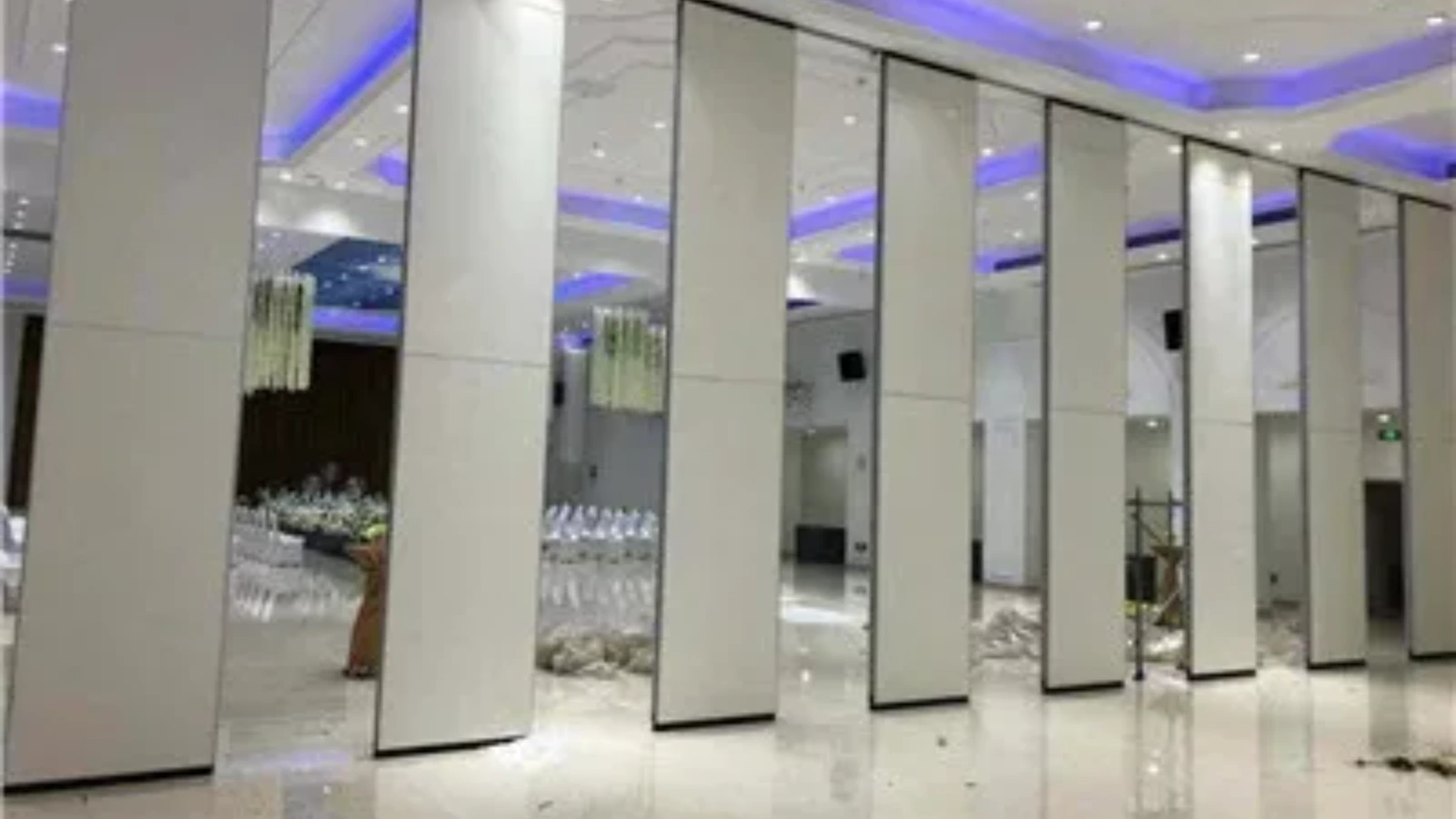
Movable wall panels are individually movable, suspended from a top track, cross the opening without a floor track and park at a planned stacking position. The register should therefore index the layout that shows those routes. If a route is not continuous or the stacking position is not coordinated, mark it as pending rather than assuming it will work.
A Numbered Process for Running the Register
Checklist focus: partition tender document register.
- Collect the current drawing set and specification from the design lead.
- Assign a unique register ID to every document and record its revision.
- Map each document to the tender scope item it supports.
- Flag any item that depends on project-specific support, acoustic or dimensional confirmation.
- Issue the register to all bidders at the same time, with a clear response deadline.
- Log every question and answer, then reissue the register when an addendum changes a document.
- Freeze the register before bid review and record the freeze date.
This process keeps the register alive without letting it drift. The freeze step is important: bidders should know which revision their price is based on.
Version Control and Evidence Boundaries
Version control is the difference between a useful register and a source of disputes. Use a simple rule: one document, one current revision, one owner. When a drawing is replaced, mark the old revision superseded and keep it visible for traceability.
Evidence boundaries matter just as much. A product page does not prove a project outcome. The register should separate confirmed product facts from items that still require project-specific review.
| Register item | What it can support | What still needs confirmation |
|---|---|---|
| Layout drawing | Straight, turning and stacking routes | Support, dimensional and acoustic review |
| Finish schedule | Named finish options such as laminate or glass | Cleaning compatibility and project approval |
| Acoustic intent note | Conceptual STC or Rw target discussion | Project-specific acoustic performance |
| Clarification log | Questions and answers issued to bidders | Any answer not yet confirmed in writing |

Coordinating Bidders and Clarifications
A shared clarification log prevents one bidder from receiving information that others do not have.
Encourage bidders to cite the register ID and revision in every question.
Pass-door and access questions
Pass-door requirements should be raised early. The register can record that pass-door requirements and project documentation can be discussed, but the final configuration depends on the layout and project review.
Common Register Mistakes to Avoid
Most register failures are procedural, not technical. Watch for these patterns.
- Issuing documents without revision numbers or issue dates.
- Allowing bidders to work from locally saved copies.
- Recording assumed performance values as if they were confirmed.
- Forgetting to reissue the register after an addendum.
- Leaving route or stacking questions unresolved at freeze.
Each mistake increases the risk that bids are not comparable. A short review before issue catches most of them.
Frequently Asked Questions
What is a partition tender document register?
It is a controlled index of the drawings, schedules, specifications and clarifications that bidders use before bid review. It records revision, status and ownership so every bidder works from the same baseline.
Which documents should be included?
Include layout drawings, opening and pass-door schedules, finish schedules, specification sections, approved product literature and the clarification log. Add any project-specific coordination drawings that affect scope.
How does the register handle acoustic information?
It should record acoustic intent as a project-specific item.
When should the register be frozen?
Freeze it before bid review, once all addenda have been issued and outstanding clarifications are either answered or clearly marked as pending. Record the freeze date and revision set.
Can the register confirm support or dimensional outcomes?
No. The exact overhead route and support arrangement must be confirmed by the responsible project team from coordinated drawings.
How should finish options be recorded?
List the named finish options such as laminate, melamine, fabric, leather, glass or other approved surfaces. Do not treat a finish selection as evidence of cleaning compatibility or performance.
Conclusion and Next Step
A well-run partition tender document register gives bidders a single, traceable baseline and gives reviewers a clear record of what was confirmed and what remains open. Keep it version-controlled, separate confirmed facts from project-specific questions, and freeze it before bid review.
To discuss your layout, routes, finish schedule or pass-door requirements, contact the EBUNGE team. You can also review the acoustic partition wall range, explore project solutions, or request a quote once your register is ready.