
Quick project answer
Review focus: partition tender scope description.
A partition tender scope description review is not a line-by-line proofreading exercise. It is a structured check that the written scope matches the drawings, the movement routes and the evidence available for each claim. Incomplete descriptions rarely look incomplete at first glance. They often read smoothly while leaving critical coordination points unresolved. This guide helps contractors, architects, interior designers, owners and renovation teams detect those gaps before pricing or award.
Why Tender Scope Gaps Survive Early Review
Project review term: partition tender scope description.
Tender documents are assembled under time pressure. The exact route, junction arrangement, continuous overhead path and parking position must be confirmed from the coordinated project drawings. When the two are not cross-checked, the gap becomes a commercial and technical risk.
Incomplete scope descriptions usually fail in one of three ways: they omit a physical requirement, they imply a performance outcome without evidence, or they leave a coordination task unassigned. None of these require bad intent. They require a review method that separates confirmed product facts from project-specific assumptions.
Confirmed facts versus project assumptions
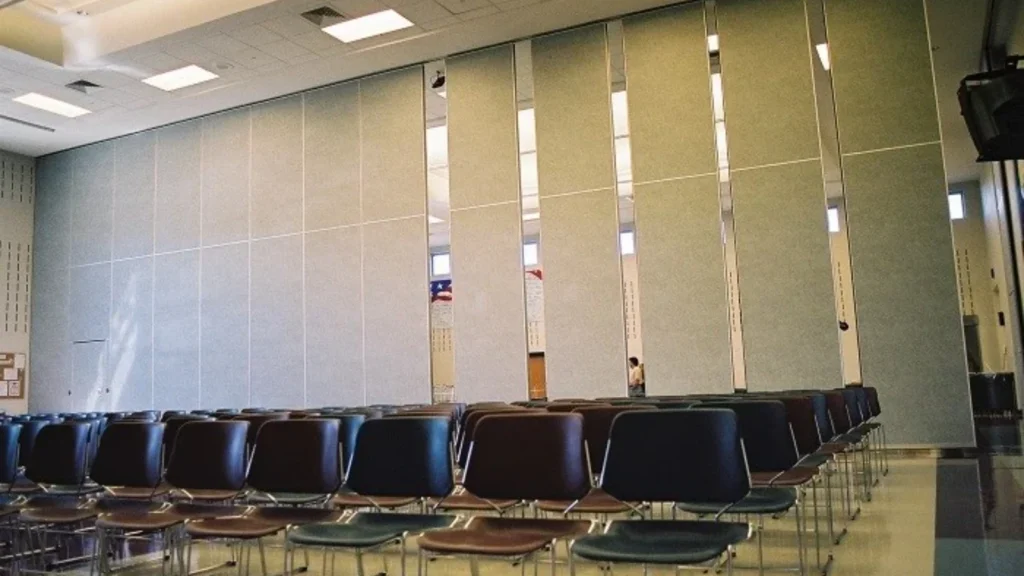
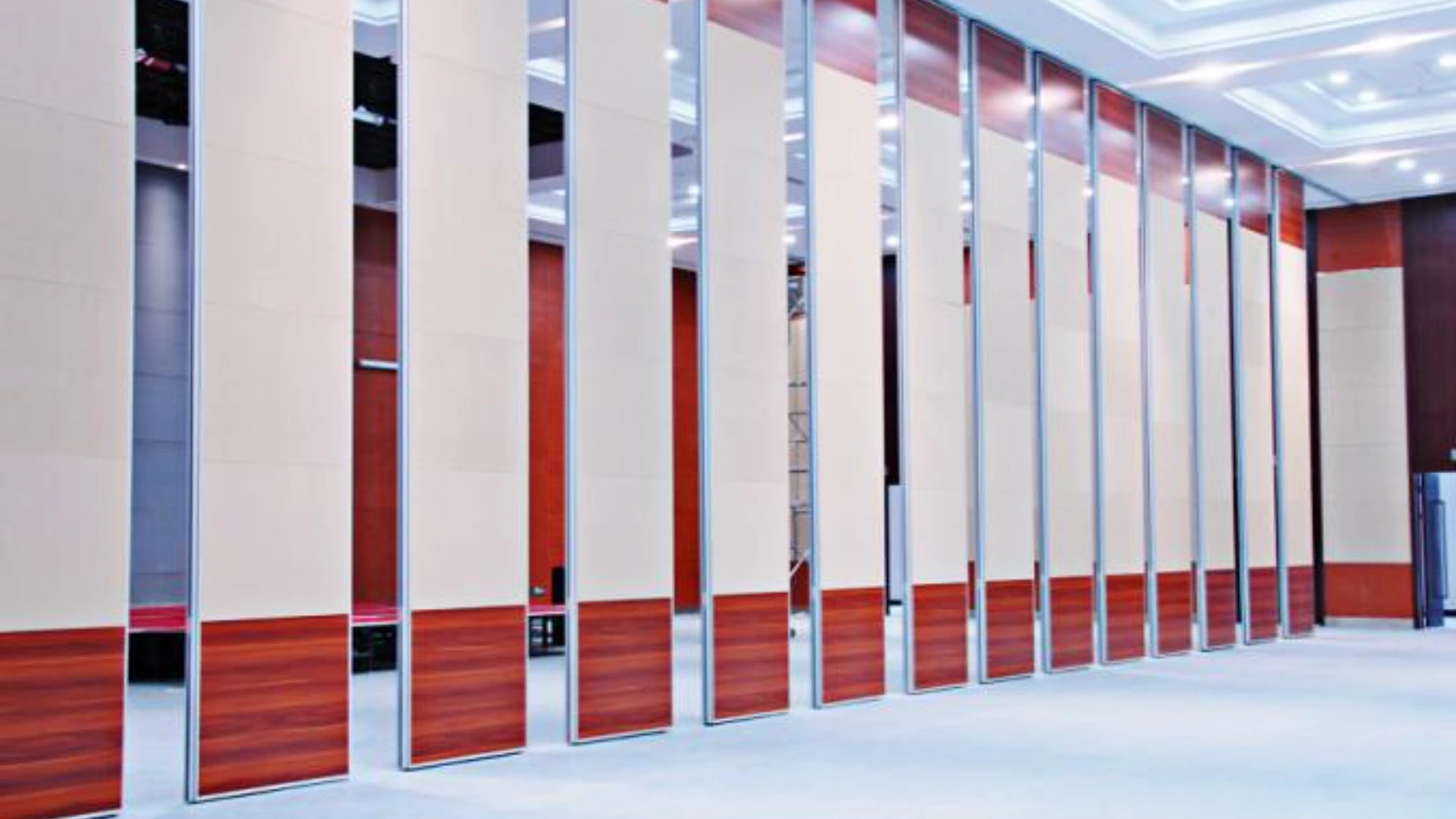
Confirmed EBUNGE facts include that movable wall panels are individually movable, suspended from a top track, cross the opening without a floor track, and park at a planned stacking position. Straight, turning and stacking routes are reviewed from the layout. Finish options include laminate, melamine, fabric, leather, glass and other approved surfaces. Pass-door requirements and project documentation can be discussed.
A tender description that presents such items as settled without supporting evidence is a warning sign.
A Decision Checklist for Scope Completeness
Coordination scope: partition tender scope description.
Use this checklist during the movable partition wall tender review. It is designed to surface missing information rather than to approve a design.
- Movement route: Does the description state that panels travel on a continuous connected overhead route, with no floor track along the partition line?
- Parking position: Is a planned stacking position identified, and is it coordinated with the layout?
- Turning points: Where the route turns, does the scope confirm that the overhead route remains continuous and supported?
- Finish schedule: Are finishes named from the approved options, and is the substrate or surface condition addressed?
- Pass doors: If pass doors are required, are they described as a project-specific requirement to be discussed?
- Acoustic intent: Is STC or Rw referenced as a project-specific requirement rather than a guaranteed outcome?
- Documentation: Does the scope list the drawings, schedules and coordination documents required for review?
- Evidence boundary: Are performance, structural and dimensional claims tied to project-specific confirmation?
How to Read Acoustic Language in a Tender
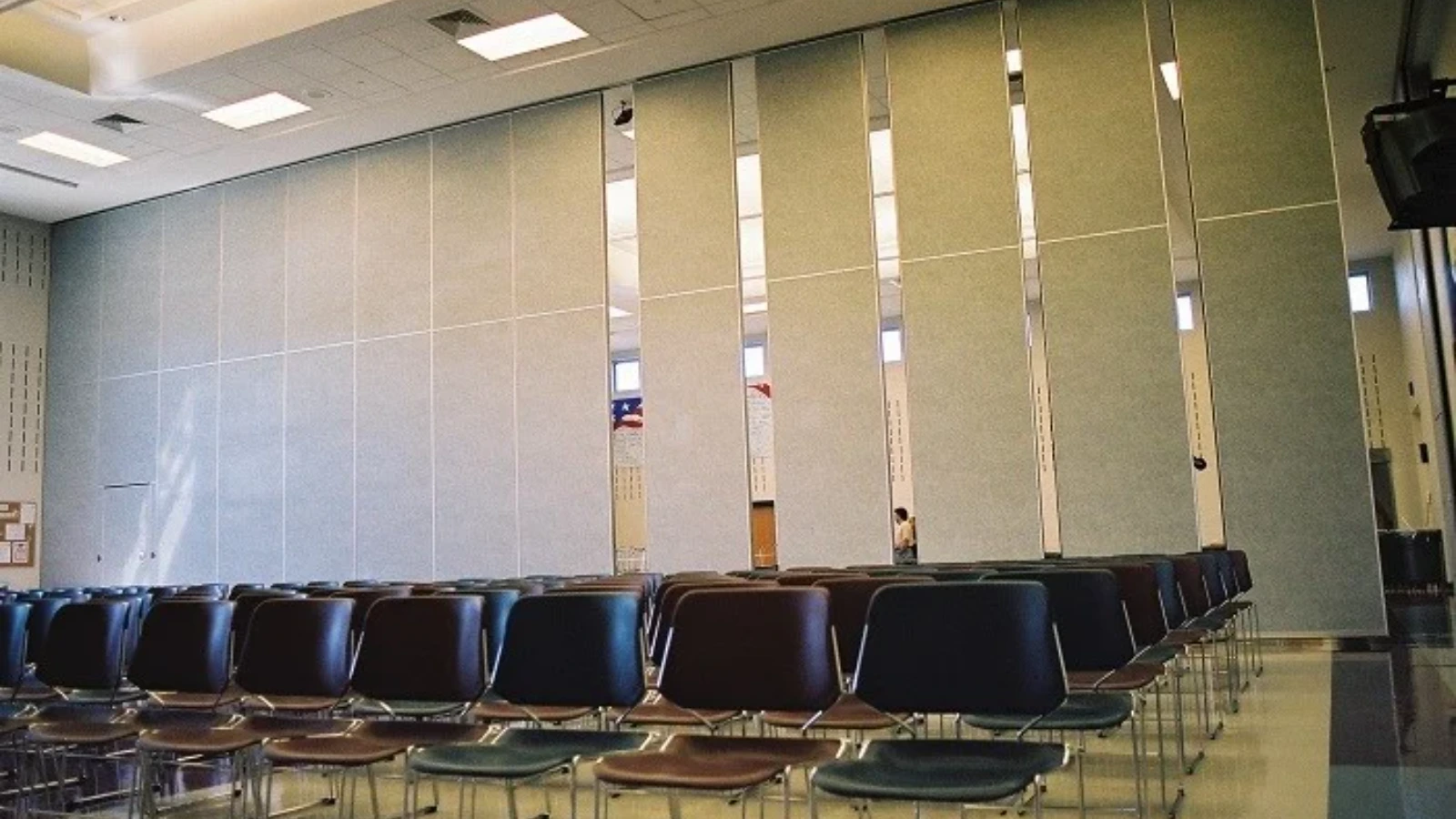
Acoustic descriptions are a common source of overreach. The suitability of each route and parking arrangement depends on the approved layout, circulation, ceiling interfaces and operating sequence.
A complete tender description should state the acoustic requirement as a project-specific target and identify the evidence needed to assess it.
Questions that expose acoustic assumptions
Ask whether the stated rating applies to the panel alone or to the complete installed condition. Ask which test evidence is available and whether it matches the proposed configuration. If the answer is unclear, the scope is incomplete for acoustic purposes.
Route and Support Review Before Pricing
Movement routes are where incomplete descriptions cause the most downstream disruption. Another may show a parking area without confirming that the overhead route connects to it.
Every proposed movement path requires a continuous connected overhead route and project-specific support review. The scope description should direct the reader to the layout drawings and state that straight, turning and stacking routes are reviewed from that layout.
Evidence note
Do not infer structural capacity, acoustic performance, dimensional limits or installation outcomes from a visible finish, a photograph or a generic drawing. Those items require matching project evidence and confirmation.
Comparing Scope Statements Against Evidence
The table below shows how to classify common tender statements. It is a review aid, not a substitute for project-specific confirmation.
| Statement type | Review action | Evidence status |
|---|---|---|
| Panels are top-hung and cross the opening without a floor track | Confirm against maintained product facts | Supported |
| Parking position is shown on the layout | Check that the route connects to the parking area | Project-specific |
| Acoustic rating is stated as a fixed outcome | Request project-specific acoustic evidence | Requires confirmation |
| Finish is named from approved options | Confirm surface and coordination requirements | Project-specific |
| Installation sequence and manpower are described | Remove or replace with confirmed project documentation | Unsupported |
Procurement and Tender Review Coordination
Scope gaps often sit between disciplines. The architect may own the opening dimensions, the contractor may own the support condition, and the owner may own the acoustic target. A partition tender scope description review should assign each item to a responsible party and a required document.
Coordination improves when the tender includes a short schedule of confirmations. This schedule lists the items that must be verified before fabrication or installation, such as support locations, route continuity, parking dimensions and finish approvals. It does not need to resolve every item at tender stage, but it must name them.
Numbered process for a scope review meeting
- Walk the movement route from the open position to the parking position on the layout.
- List each performance claim and identify the evidence required to support it.
- Separate confirmed product facts from project-specific assumptions.
- Assign each open item to a discipline and a due date.
- Record the confirmation boundary in the tender addendum.
FAQ: Partition Tender Scope Description Review
What is the first sign that a partition tender scope description is incomplete?
The first sign is usually a performance or dimensional claim that is stated as settled without a reference to project-specific evidence. If the description does not say what must be confirmed, treat it as incomplete.
Should a tender description include acoustic ratings?
Provide the current layout, opening dimensions, ceiling information, intended room use, and relevant project drawings for review. The exact overhead route and support arrangement must be confirmed by the responsible project team from coordinated drawings.
How should parking and stacking be described?
The description should identify a planned stacking position and confirm that the overhead route connects to it. Parking style is customized to the layout and project requirements, so the tender should refer to the coordinated design.
What finish information belongs in the scope?
Name finishes from the approved options, such as laminate, melamine, fabric, leather, glass and other approved surfaces.
When should pass doors be addressed?
Pass-door requirements can be discussed as part of project documentation. If pass doors are needed, the tender should identify them as a project-specific item rather than assume a standard solution.
Can a tender description confirm structural support?
No.
Conclusion: Review the Boundary, Not Just the Text
Detecting an incomplete partition tender scope description means checking whether every claim has a matching evidence boundary. Confirm the movement route, parking position, finish schedule, pass-door requirements and acoustic intent against the layout and the maintained product facts. Where evidence is missing, mark the item for project-specific confirmation rather than filling the gap with assumptions.
For coordinated review of movable partition requirements, contact EBUNGE to discuss project documentation, or request a quote with your layout drawings. You can also explore flexible space solutions for additional application context.