
Quick project answer
Review focus: changeover policy gaps.
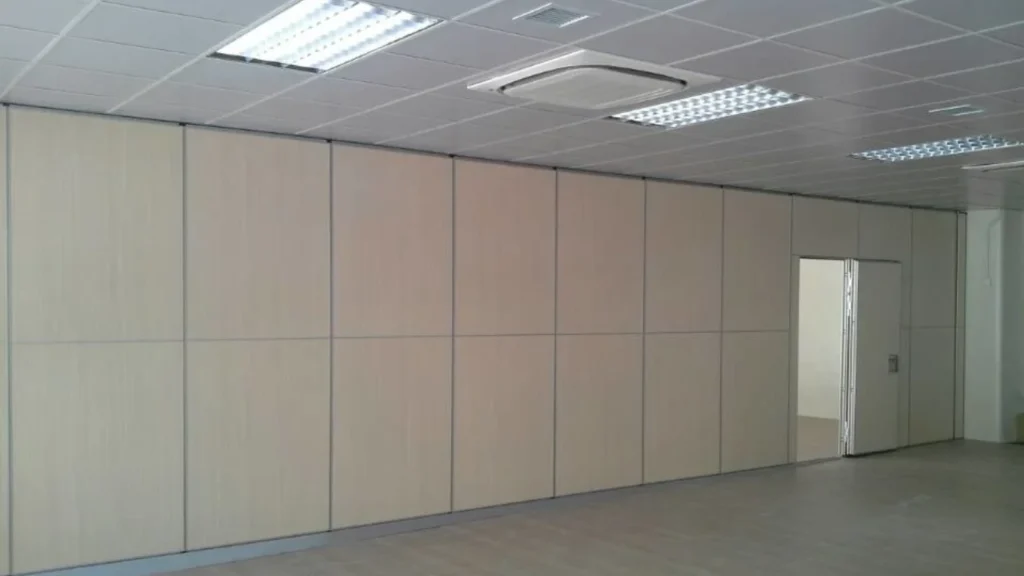
Movable partition changeover policy gaps rarely appear as a single failure. They accumulate quietly between design intent, procurement language and daily room operations. For overseas contractors, architects, interior designers, owners and renovation teams, the most useful first step is to separate what the product actually does from what a project team assumes it will do. EBUNGE movable partition panels are individually movable, suspended from a top track, cross the opening without a floor track, and park at a planned stacking position. That maintained fact set is narrow on purpose. It gives project teams a reliable baseline for reviewing changeover policy without inventing performance, engineering or commercial conclusions.
This article maps common policy gaps and shows where project-specific confirmation is required. Named venue types are examples only; the same review logic applies wherever flexible spatial division, combination or reconfiguration is required.
Why Changeover Policy Gaps Matter Before Installation
Project review term: changeover policy gaps.
A changeover policy is the written and unwritten rule set that governs how a flexible room moves from one configuration to another. It covers who may reconfigure the space, which routes are approved, where panels park, how finishes are protected and what documentation is handed over. When those rules are missing or contradictory, room turnaround slows even if the partition itself is correctly specified.
Gaps often surface during coordination meetings rather than on drawings. The exact route, junction arrangement, continuous overhead path and parking position must be confirmed from the coordinated project drawings. An architect may show a stacking position that conflicts with a service corridor. An owner may assume that any staff member can complete a changeover without a documented sequence. Each assumption is a policy gap waiting to be resolved.
Separating product facts from project assumptions
Maintained product facts describe how panels move and park. The suitability of each route and parking arrangement depends on the approved layout, circulation, ceiling interfaces and operating sequence. Treat any statement beyond the maintained facts as a project-specific question that requires matching evidence, drawing review and written confirmation.
Common Policy Gaps in Flexible Room Operations
Coordination scope: changeover policy gaps.
Most slowdowns trace back to a small set of recurring gaps. Reviewing them early helps project teams avoid rework and keeps changeover expectations realistic.
- Route ambiguity: straight, turning and stacking routes are not reviewed together from the layout.
- Parking assumptions: the stacking position is shown but not coordinated with adjacent doors, services or circulation.
- Responsibility gaps: no named party owns the changeover sequence or the condition check after each use.
- Finish coordination: laminate, melamine, fabric, leather, glass and other approved surfaces are selected without confirming cleaning and handling expectations.
- Documentation gaps: pass-door requirements and project documentation are discussed late, after procurement language is fixed.
Why route review is a policy issue, not only a drawing issue
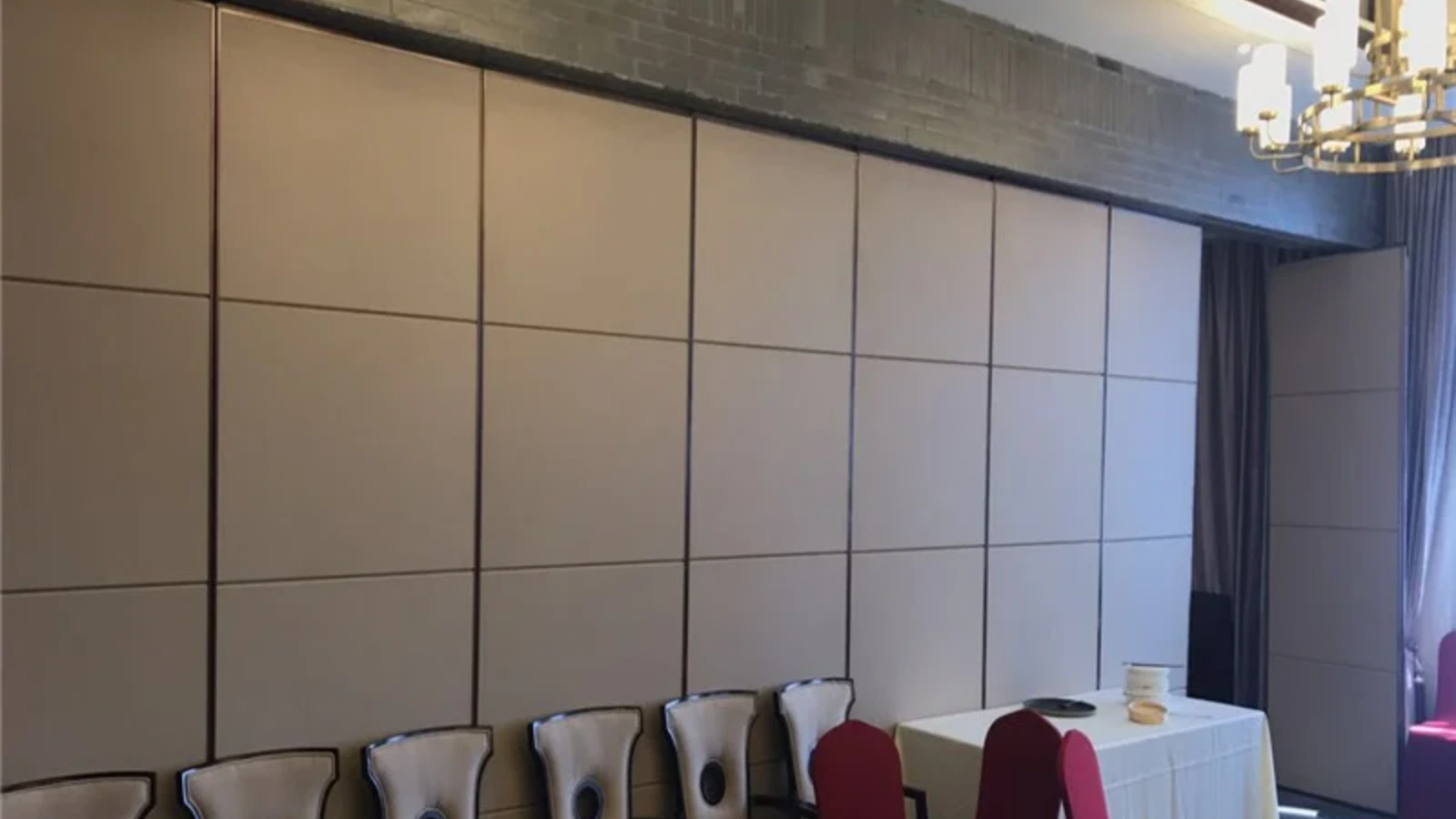
Panels are suspended from a top track and cross the opening without a floor track. Every proposed movement path therefore requires a continuous connected overhead route and project-specific support review. Confirm support, acoustic and dimensional requirements with the project team before finalizing changeover rules.
A Decision Checklist for Changeover Policy Review
Checklist focus: changeover policy gaps.
Use this checklist during design coordination and again before handover. It is deliberately evidence-bounded; each item should be answered with project documentation rather than assumption.
| Review item | Question to resolve | Evidence needed |
|---|---|---|
| Movement route | Are straight, turning and stacking routes shown and reviewed together? | Coordinated layout drawings |
| Parking position | Does the planned stacking position avoid conflicts with circulation and services? | Layout and site review |
| Overhead support | Is the continuous connected overhead route confirmed for the proposed path? | Project-specific support review |
| Finish selection | Are approved surfaces confirmed for the intended room use? | Finish schedule and project confirmation |
| Pass-door needs | Are pass-door requirements discussed and documented? | Project documentation |
| Acoustic expectation | Is STC or Rw defined as a project-specific rating, not a decibel count? | Project-specific acoustic confirmation |
How to Write a Workable Changeover Policy
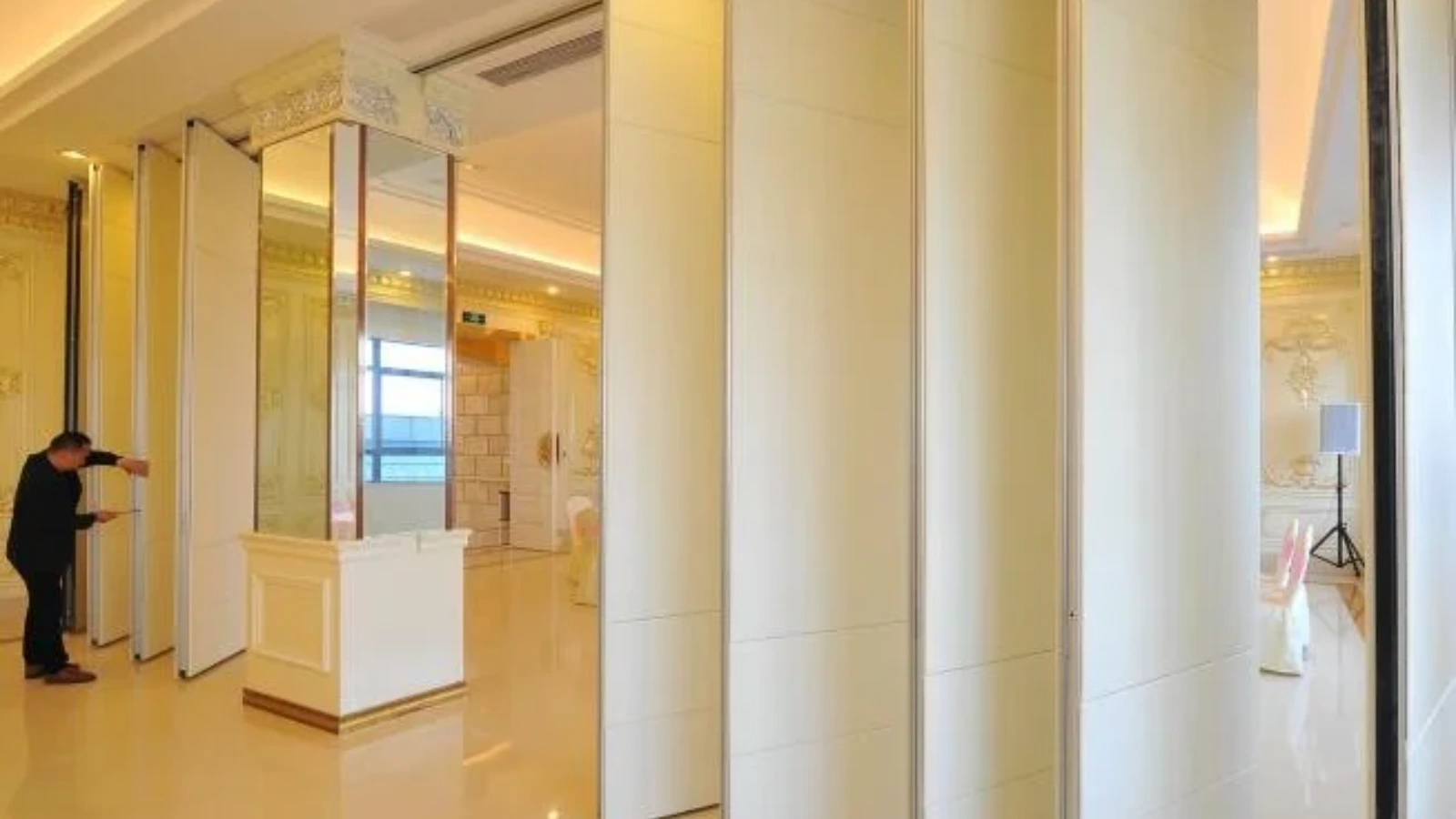
A workable policy is short enough to be used and specific enough to prevent improvisation. It should describe approved routes, the planned stacking position, the sequence of panel movement and the condition check after each changeover.
- Confirm the room configurations the project actually needs.
- Review straight, turning and stacking routes from the layout.
- Confirm the parking position and its relationship to circulation.
- Document approved finishes and handling expectations.
- Confirm pass-door requirements and project documentation.
- Record the project-specific support, acoustic and dimensional confirmations.
- Assign responsibility for the changeover sequence and post-use checks.
- Review the policy at handover and after the first operational cycle.
Coordination between operations and facility planning
Operations can flag realistic turnaround constraints, while facility planning can confirm what the overhead route and stacking position allow. Where the two views conflict, the conflict should be resolved in documentation before the policy is issued.
Evidence Boundaries for Specification Language
Visible references can support layout discussion but do not verify hidden construction or performance. Comparative and absolute statements require corresponding evidence; otherwise they should be removed or replaced with an exact project-specific confirmation boundary.
Evidence note: EBUNGE confirms that panels are individually movable, top-hung, floor-track-free along the partition line, and parked at a planned stacking position. Finish options include laminate, melamine, fabric, leather, glass and other approved surfaces. Pass-door requirements and project documentation can be discussed. The exact overhead route and support arrangement must be confirmed by the responsible project team from coordinated drawings.
Acoustic concepts without decibel counting
Confirm acoustic requirements with the project team and treat them as project-specific.
FAQ: Movable Partition Changeover Policy Gaps
What are movable partition changeover policy gaps?
They are missing or contradictory rules that govern how a flexible room moves between configurations. Typical gaps include unclear routes, uncoordinated parking positions, undefined responsibility and late documentation.
Do movable partitions need a floor track for changeover?
EBUNGE movable partition panels are suspended from a top track and cross the opening without a floor track. Every proposed movement path still requires a continuous connected overhead route and project-specific support review.
Can any approved finish be used in every room?
Finish options include laminate, melamine, fabric, leather, glass and other approved surfaces. Suitability depends on the project, so confirm finish selection and handling expectations with the project team.
How should acoustic expectations be written into policy?
Provide the current layout, opening dimensions, ceiling information, intended room use, and relevant project drawings for review. The exact overhead route and support arrangement must be confirmed by the responsible project team from coordinated drawings.
When should pass-door requirements be discussed?
Discuss pass-door requirements and project documentation early, before procurement language and changeover rules are fixed. Late discussion often creates policy gaps that slow room turnaround.
Who should own the changeover policy?
Ownership should be assigned in project documentation.
Conclusion and Next Steps
Start with the maintained product facts, review straight, turning and stacking routes from the layout, confirm the parking position, document approved finishes and resolve pass-door and acoustic questions with project-specific evidence.
To review your project requirements, contact EBUNGE or request a quote. You can also explore movable partition walls and our solutions for flexible-space planning.