
Quick answer: room booking rules partition changeover
Review focus: room booking rules partition changeover.
Room booking rules partition changeover policy sits at the intersection of scheduling software and physical space design. When a venue relies on movable walls to divide or combine rooms, the way those rooms are booked determines how often panels move, where they park, and which routes they follow. For overseas contractors, architects, and facility teams, the goal is not to guess performance but to align confirmed product facts with project-specific booking patterns. This guide explains how to connect booking logic to partition planning without inventing engineering, acoustic, or commercial outcomes.
Why Booking Rules Matter for Movable Partition Planning
Project review term: room booking rules partition changeover.
Booking rules define how a space is used over time. They set minimum booking durations, buffer times between events, and whether adjacent rooms can be combined. These rules directly affect how often a movable partition must be reconfigured. A room that switches between one large hall and two smaller rooms several times a day places different demands on the partition system than a space that changes once a week.
For project teams, the first step is to map booking patterns against partition movement. If the schedule shows frequent changeovers, the layout must support efficient routes and a planned stacking position. If changeovers are rare, the same product family may still be suitable, but the operational policy around it will differ. The key is to treat booking rules as a design input, not an afterthought.
How Changeover Frequency Shapes Layout Decisions
Coordination scope: room booking rules partition changeover.
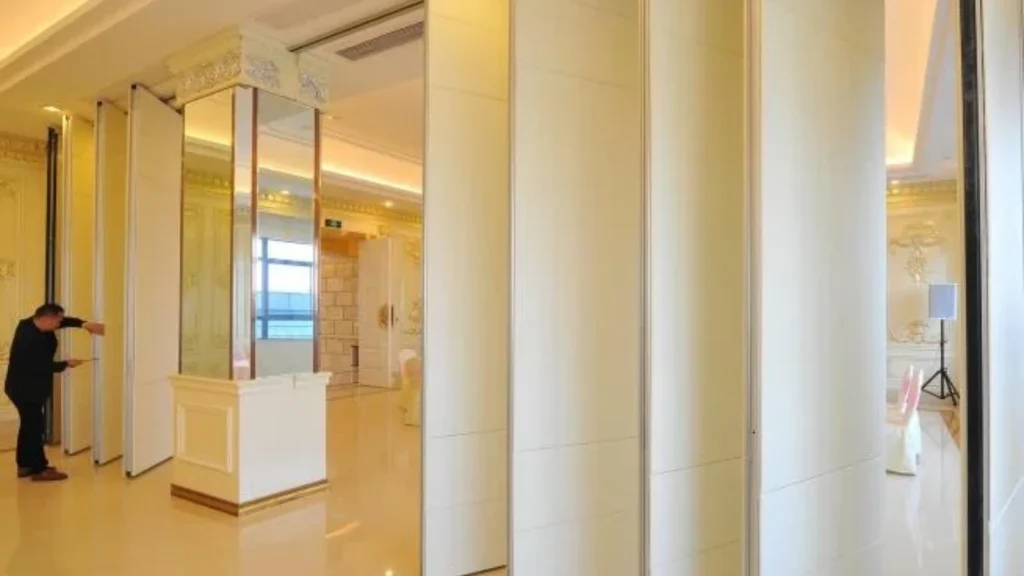
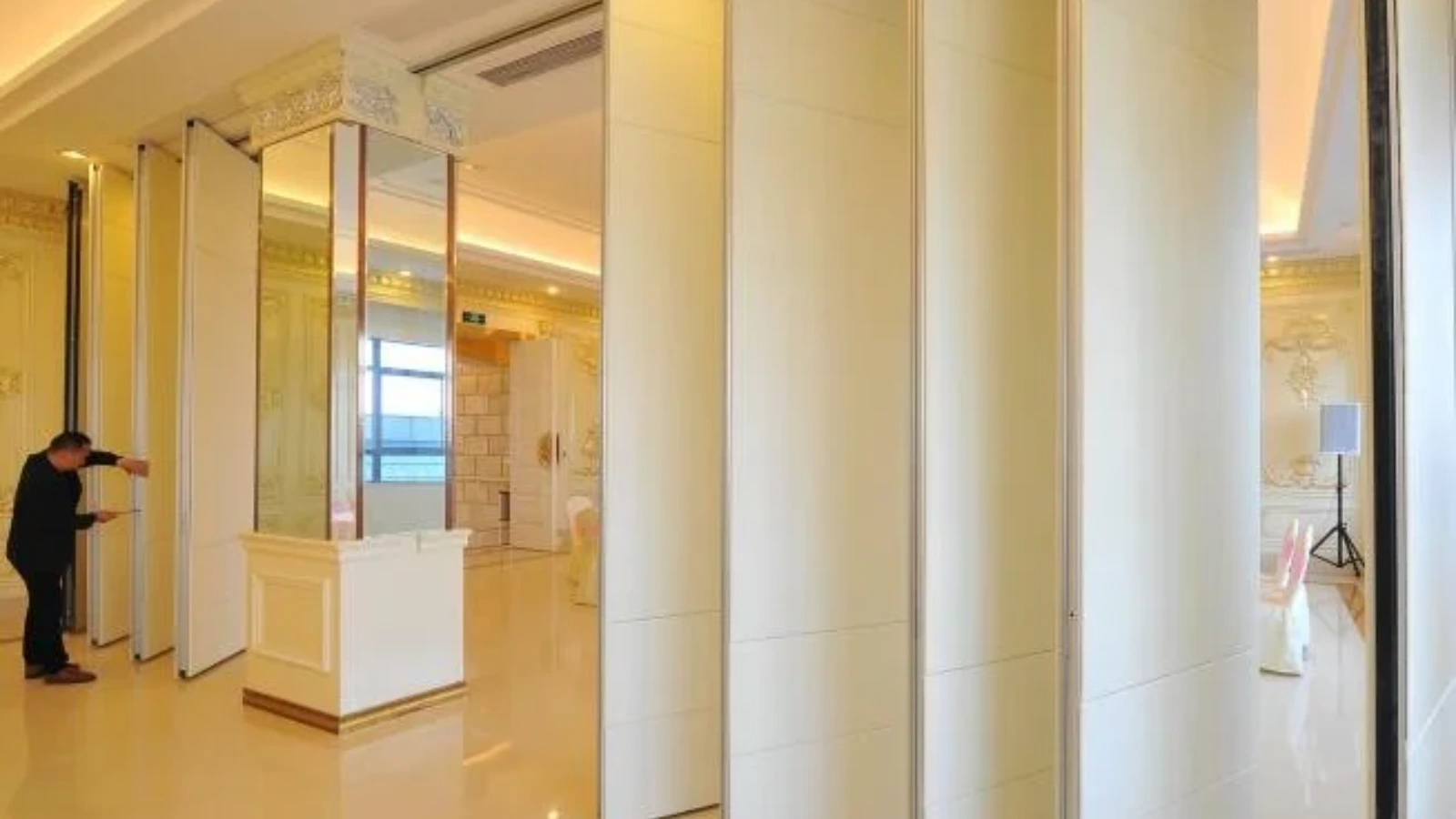
Changeover frequency is the number of times a partition is moved within a given period. It influences how the top track is routed, where panels park, and how much clear space is needed for movement. EBUNGE movable partition panels are individually movable, suspended from a top track, and cross the opening without a floor track. They park at a planned stacking position. Straight, turning, and stacking routes are reviewed from the layout.
When booking rules allow back-to-back events with short buffers, the layout should minimize travel distance and avoid conflicts with furniture or circulation paths. The exact overhead route and support arrangement must be confirmed by the responsible project team from coordinated drawings. The project team should review the booking calendar alongside the architectural drawings to confirm that the proposed movement path is continuous and supported.
Questions to Ask About Changeover Frequency
- How many times per day or week will the partition move?
- Are there peak periods where multiple rooms change simultaneously?
- Does the booking system allow buffer time for changeover?
- Will staff or contractors perform the changeover, and is that reflected in the policy?
Parking Position and Booking Conflicts
Checklist focus: room booking rules partition changeover.
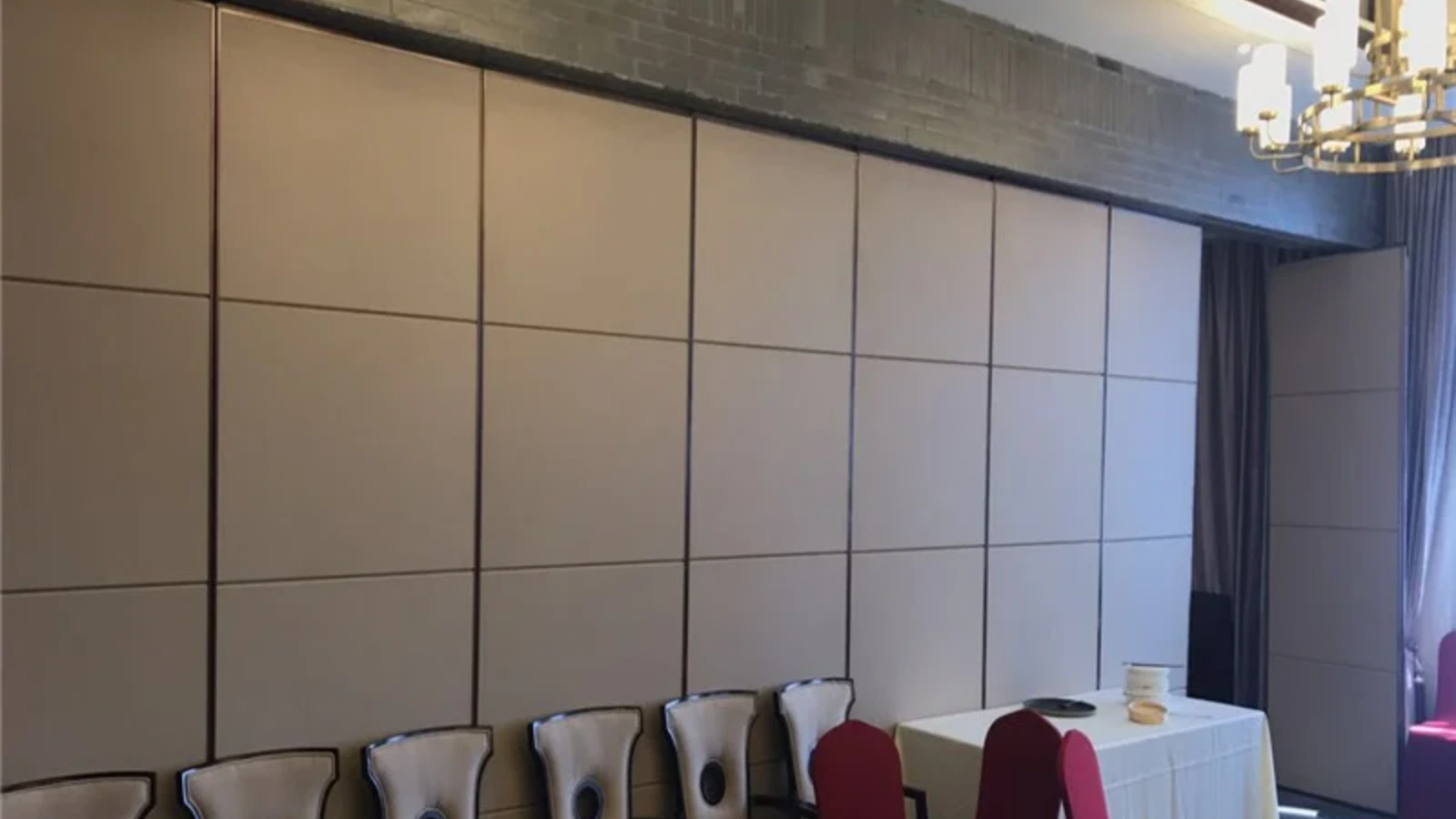
The parking position is where panels rest when the space is open. It must be planned so that it does not block circulation, emergency egress, or other booked functions. If booking rules allow the same room to be used for different purposes, the parking position may need to accommodate multiple configurations.
EBUNGE parking style is customized to the customer layout and project requirements and may support compact stacking when the coordinated design permits it. The suitability of each route and parking arrangement depends on the approved layout, circulation, ceiling interfaces and operating sequence. Project teams should confirm parking requirements with the design team and ensure that booking rules do not assume a parking location that conflicts with other uses.
Checklist: Parking and Booking Coordination
- Confirm the parking position does not obstruct exits or accessible routes.
- Verify that the parking area is included in the room booking footprint.
- Check whether booking rules allow enough time to move panels to and from parking.
Finish Selection and Booking Policy
Review focus: room booking rules partition changeover.
Finish options for movable partitions include laminate, melamine, fabric, leather, glass, and other approved surfaces. The choice of finish can affect how a space is perceived and how it is booked. For example, a glass finish may suit a meeting room that is booked for presentations, while a fabric finish may be preferred for a training room.
Booking rules may specify certain rooms for certain activities, and the finish should align with those activities. Project teams should confirm finish compatibility with the intended use and cleaning regime as part of the specification process.
Pass-Door Requirements and Booking Flexibility
Project review term: room booking rules partition changeover.
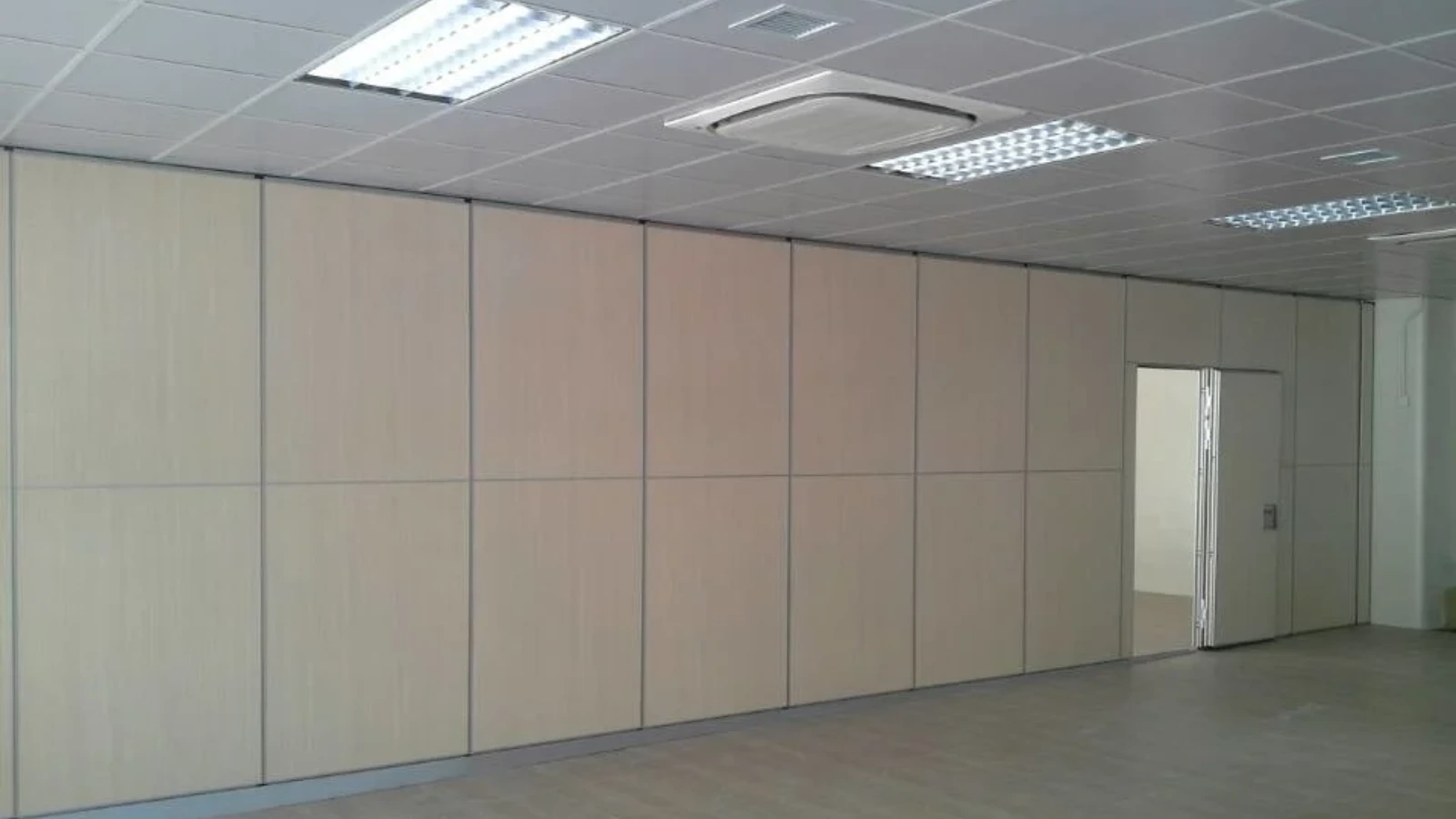
Pass-door requirements can influence how a room is booked. A pass door allows people to move between adjacent spaces without opening the entire partition. If booking rules require frequent access between two rooms, a pass door may be considered. EBUNGE can discuss pass-door requirements and project documentation as part of the coordination process.
The decision to include a pass door should be based on the booking pattern and the operational needs of the venue. It is not a standard feature and must be confirmed for each project.
Acoustic Concepts and Booking Expectations
For example, a room booked for confidential meetings may require a higher degree of separation than a room used for casual gatherings.
Documentation and Project-Specific Confirmation
Every project has unique requirements. The booking rules, layout, finish selection, and pass-door needs must be documented and reviewed together. EBUNGE can provide project documentation and discuss specific requirements, but final confirmation depends on the project drawings and coordination with the design team.
Contractors, architects, and facility managers should ensure that the changeover policy is written into the booking system and communicated to staff. This includes who moves the panels, how long it takes, and what to do if a panel is damaged. The policy should be reviewed periodically as booking patterns change.
Evidence Note
This article is based on confirmed EBUNGE product facts: top-hung panels, no floor track, customized parking, and finish options including laminate, melamine, fabric, leather, and glass. It does not include test values, certifications, or performance guarantees. Project-specific support, acoustic, and dimensional requirements must be confirmed with the EBUNGE team and the project design team.
FAQ: Room Booking Rules and Partition Changeover
How do room booking rules affect movable partition changeover?
Booking rules determine how often a partition moves and how much time is available for changeover. Frequent bookings with short buffers require a layout that supports efficient routes and a planned parking position. The project team should review the booking calendar alongside the partition layout.
Can any movable partition be used with any booking system?
Movable partitions can be considered for many flexible spaces, but the specific configuration must match the project requirements. Booking rules, layout, and operational needs should be reviewed together to confirm suitability.
What is a pass door and when is it needed?
A pass door allows access between adjacent rooms without opening the entire partition. It may be considered when booking rules require frequent movement between spaces. Pass-door requirements can be discussed with EBUNGE as part of project documentation.
Do movable partitions require a floor track?
EBUNGE movable partition panels are top-hung and move without a continuous floor running track or floor hardware along the partition line. The panels are suspended from a top track and cross the opening without a floor track.
How should acoustic expectations be set in booking rules?
Provide the current layout, opening dimensions, ceiling information, intended room use, and relevant project drawings for review. The exact overhead route and support arrangement must be confirmed by the responsible project team from coordinated drawings.
What documentation is needed for changeover policy?
Project teams should document the booking rules, partition layout, parking position, finish selection, and pass-door requirements. EBUNGE can discuss project documentation and specific requirements, but final confirmation depends on the project drawings.
Conclusion: Align Booking Rules with Partition Planning
Room booking rules partition changeover policy is not a one-size-fits-all formula. It requires coordination between the booking system, the physical layout, and the confirmed capabilities of the movable partition. By treating booking rules as a design input, project teams can plan routes, parking, and finishes that support real operational needs without overstepping evidence boundaries.
To discuss your project-specific requirements, contact EBUNGE for a consultation. You can also review our movable partition walls and explore solutions for flexible spaces. For pricing and project documentation, request a quote.