
Quick project answer
Review focus: handover documentation gaps.
Partition handover documentation gaps rarely appear as one dramatic omission. The exact route, junction arrangement, continuous overhead path and parking position must be confirmed from the coordinated project drawings. For contractors, architects, designers, owners and renovation teams, the closeout stall usually begins long before the final inspection. This guide maps the common gaps and shows how to close them with evidence-bounded coordination.
Why Closeout Stalls on Documentation, Not Installation
Project review term: handover documentation gaps.
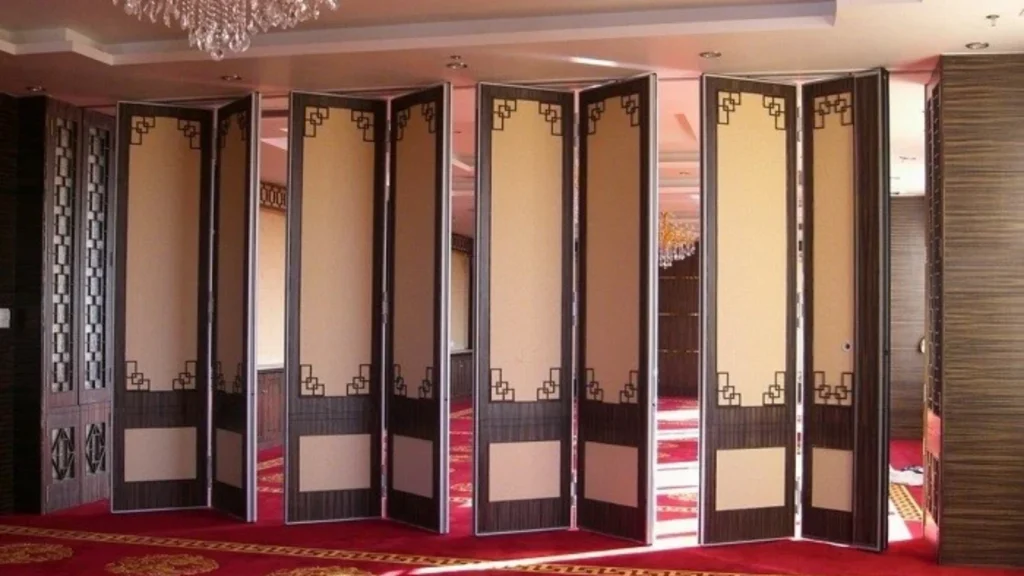
Movable partition panels are individually movable, suspended from a top track, cross the opening without a floor track, and park at a planned stacking position. Those maintained facts describe the operating concept, not a project-specific guarantee. Closeout stalls when the project record does not match the coordinated design or when reviewers cannot trace a decision back to an approved drawing.
Documentation gaps are coordination gaps. They surface when the team cannot confirm what was reviewed, what was assumed and what still requires project-specific support, acoustic and dimensional verification. Treating handover as a paperwork phase misses the point: the documents should reflect the same layout logic used for straight, turning and stacking routes.
Gap 1: Layout and Route Drawings That Do Not Match the Opening
Coordination scope: handover documentation gaps.
The layout review covers straight, turning and stacking routes. The suitability of each route and parking arrangement depends on the approved layout, circulation, ceiling interfaces and operating sequence.
What to verify before issuing the record set
- Does the drawing show the full overhead route, including turns and the parking zone?
- Is the stacking position shown in relation to the room layout, not just the panel elevation?
- Are pass-door requirements recorded where the project needs them?
- Does the drawing avoid implying floor hardware along the partition line?
Where any item is unresolved, mark it as an open coordination item rather than filling the gap with an assumption. The exact overhead route and support arrangement must be confirmed by the responsible project team from coordinated drawings.
Gap 2: Finish Approvals Without a Traceable Decision
Checklist focus: handover documentation gaps.
Confirmed finish options include laminate, melamine, fabric, leather, glass and other approved surfaces. A finish schedule that names a category without an approval reference creates a closeout question: approved by whom, against which sample, and for which room?
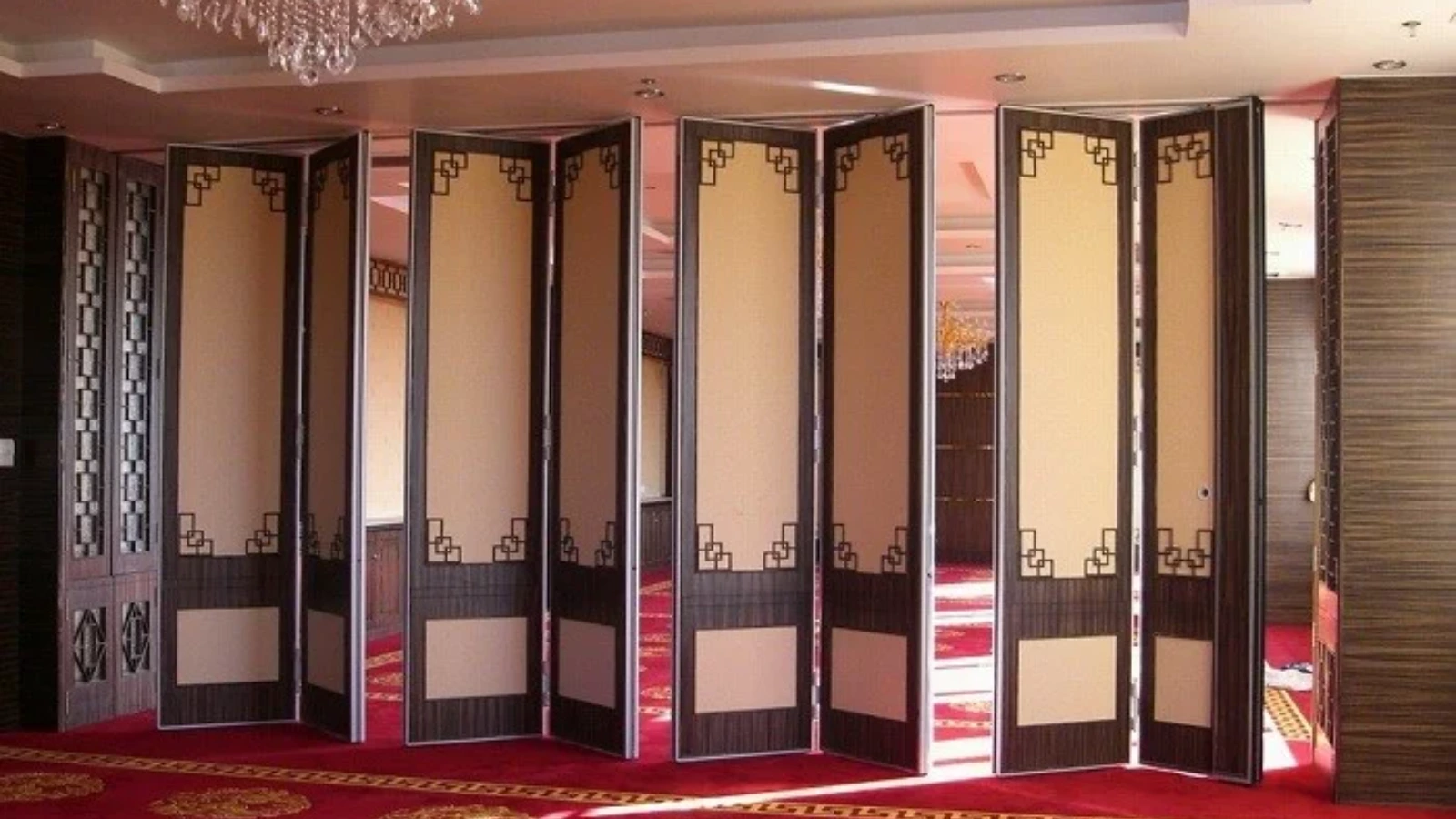
Finish documentation should connect each room or zone to the approved surface category. Those are separate questions with separate evidence boundaries.
Finish record checklist
- List each zone and the approved finish category.
- Reference the approval date or transmittal, not just the finish name.
- Separate visual approval from any performance question.
- Flag any finish substitution as a new approval item.
Gap 3: Acoustic Documentation Reduced to a Single Number
Handover documents stall when a rating is copied into a closeout package without the project-specific context that made it relevant.
Seals and acoustic concepts can be explained generically, but the project team must confirm the specific acoustic requirement with matching evidence.
Evidence note: a visible finish, photograph or drawing does not prove acoustic, fire, durability or load performance. Those claims require their own project-specific evidence.
Gap 4: Parking and Stacking Assumptions Left Unstated
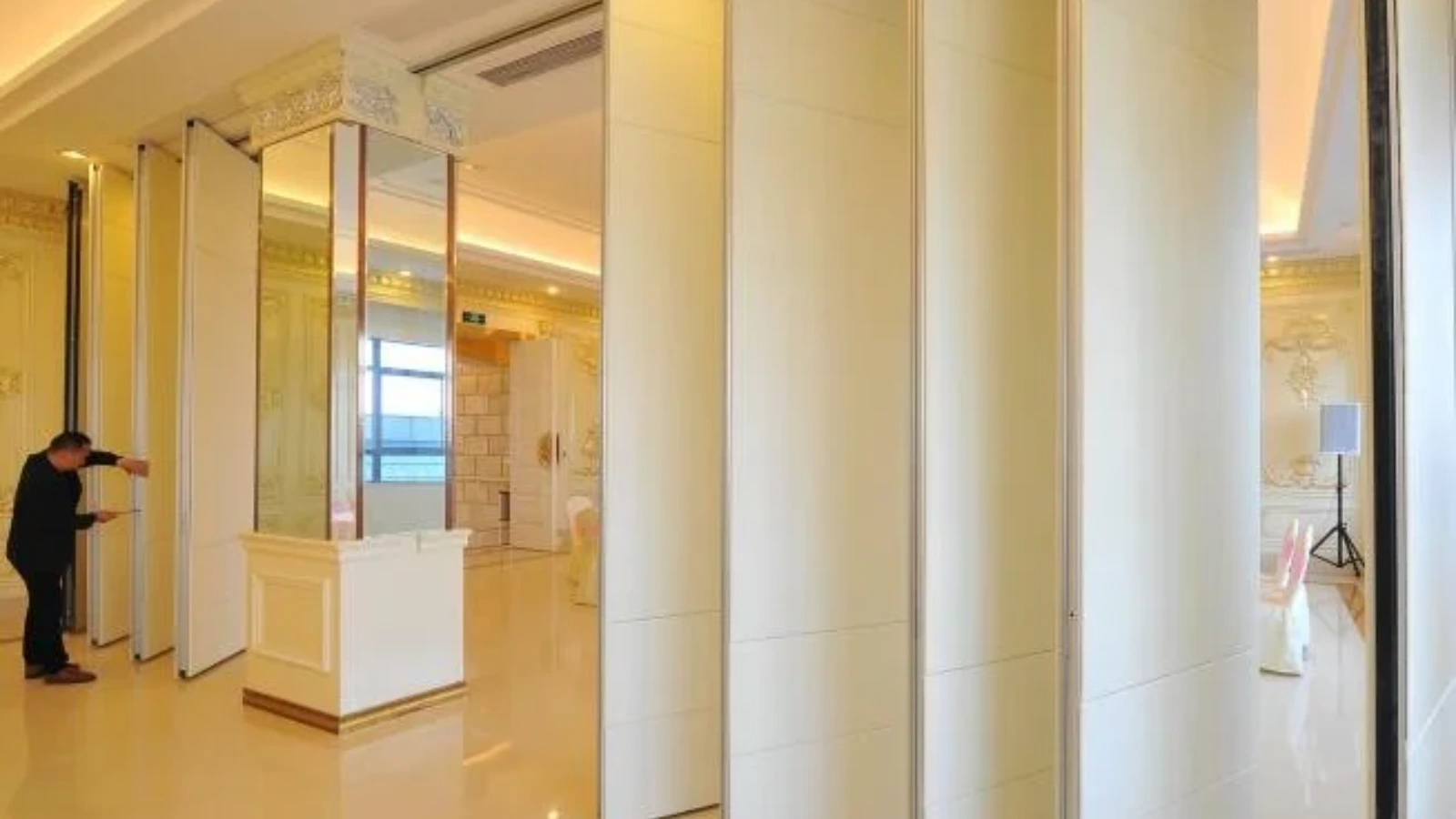
Parking style is customized to the customer layout and project requirements and may support compact stacking when the coordinated design permits it. Closeout stalls when the stacking assumption is described in conversation but absent from the drawing set.
The handover record should show the planned stacking position and the route that reaches it. Panel handling and the operating sequence must be confirmed for the selected layout and project conditions. Where the layout changes late, the stacking drawing should be revised with the same discipline as the opening drawing.
Gap 5: Pass-Door and Access Coordination
Pass-door requirements can be discussed as part of the project scope. A closeout gap appears when the pass-door location, swing or coordination with adjacent trades is missing from the record. The reviewer then cannot confirm whether the installed condition matches the approved intent.
Record pass-door decisions alongside the route drawing. If the pass-door is still under review, keep it visible as an open item rather than closing the package around it.
A Closeout Coordination Sequence for Project Teams
Use a simple sequence to keep documentation aligned with the coordinated design. It is not a substitute for project-specific review, but it helps teams avoid the most common stalls.
| Stage | Documentation focus | Confirmation boundary |
|---|---|---|
| Pre-closeout review | Layout, straight, turning and stacking routes | Project-specific support and dimensional review |
| Finish sign-off | Approved surface categories by zone | Visual approval only; performance requires separate evidence |
| Acoustic review | Referenced assembly or configuration | Project-specific acoustic requirement confirmation |
| Final record issue | Open items, pass-door status, parking position | No inferred performance or commercial conclusions |
For product context, review the movable partition walls range. For broader coordination, see the solutions overview. When the project record is ready for review, contact us to discuss documentation requirements.

FAQ: Partition Handover Documentation Gaps
What are partition handover documentation gaps?
They are missing or unconfirmed records that prevent a reviewer from tracing the installed condition back to an approved design decision. Common examples include route drawings, finish approvals, acoustic references and parking positions.
Which documents should a closeout package include for movable partitions?
The package should reflect the coordinated layout, straight, turning and stacking routes, approved finish categories, pass-door decisions and any project-specific acoustic or support confirmations. The exact list depends on the project requirements.
Can a finish approval be used as evidence of acoustic performance?
No. A finish approval confirms a surface category, not acoustic, fire, durability or load performance. Those claims require separate project-specific evidence.
How should STC or Rw be described in handover documents?
Describe them as rating concepts tied to a referenced assembly or configuration.
What should be done when the stacking position changes late?
Revise the stacking drawing and route documentation with the same review discipline as the opening drawing. Keep the change visible as an open coordination item until it is confirmed.
Does every project need the same handover documentation?
No. Documentation should match the project scope, layout and approval process. Confirm project-specific support, acoustic and dimensional requirements with the relevant project team.
Conclusion: Close the Gaps Before They Reach Closeout
Partition handover documentation gaps stall closeout because they leave reviewers without a traceable decision. Keep every statement within its evidence boundary, and confirm project-specific support, acoustic and dimensional requirements before issuing the final record.
Ready to review your project documentation? Contact EBUNGE to discuss pass-door requirements, project documentation and coordination needs, or request a quote for your movable partition scope.