
Quick answer: partition tender addenda
Review focus: partition tender addenda.
A disciplined partition tender addenda review is one of the most reliable ways to prevent scope drift before a movable wall package is priced, approved or released. Addenda often arrive as short clarifications, revised drawings or finish schedules, yet they can change how panels move, park and interface with adjacent construction. This guide offers an evidence-bounded framework for overseas contractors, architects, interior designers, owners and renovation teams. It focuses on document control, drawing coordination and explicit confirmation boundaries rather than assumed performance.
Why Addenda Deserve a Separate Review Pass
Project review term: partition tender addenda.
Addenda are usually issued after the main tender documents have been circulated. They may correct a dimension, replace a finish reference, adjust a stacking location or clarify who provides support above the opening. Because they are incremental, teams sometimes read them in isolation. The safer approach is to compare each addendum against the original specification, the latest architectural drawings and any previous addenda.
A separate review pass helps you catch contradictions between documents. The exact route, junction arrangement, continuous overhead path and parking position must be confirmed from the coordinated project drawings. A finish schedule may list a surface that is not among the confirmed options for the intended panel assembly. These are coordination issues, not automatic defects, but they must be resolved before pricing or fabrication assumptions harden.
Treat every addendum as a potential scope trigger
Ask whether the addendum changes quantity, route, parking position, finish, interface or documentation responsibility. If the answer is yes, the change should be logged and traced through the tender package.
Build a Document Comparison Routine
Coordination scope: partition tender addenda.
Start with a controlled register. List the original tender, each addendum, the latest drawing set and the finish schedule. Record the issue date, revision number and the person responsible for each document. Then compare line by line rather than relying on memory or a summary email.
Use a simple comparison table to make differences visible. The table below is a coordination tool, not a performance or compliance statement. It helps the project team decide what needs clarification.
| Review item | Question to ask | Action if unclear |
|---|---|---|
| Movement route | Does the addendum change the straight, turning or stacking path? | Request a marked-up plan showing the full route. |
| Parking position | Is the planned stacking location still available and coordinated? | Confirm with the layout drawing and adjacent trades. |
| Finish reference | Is the specified surface among the confirmed finish options? | Ask for a sample or approved surface reference. |
| Pass-door requirement | Does the addendum introduce or remove a pass-door need? | Discuss the requirement and documentation with the supplier. |
| Support interface | Does the addendum affect the overhead structure or support review? | Refer to the project structural engineer and supplier. |
Trace Movement Routes and Parking Logic
Checklist focus: partition tender addenda.
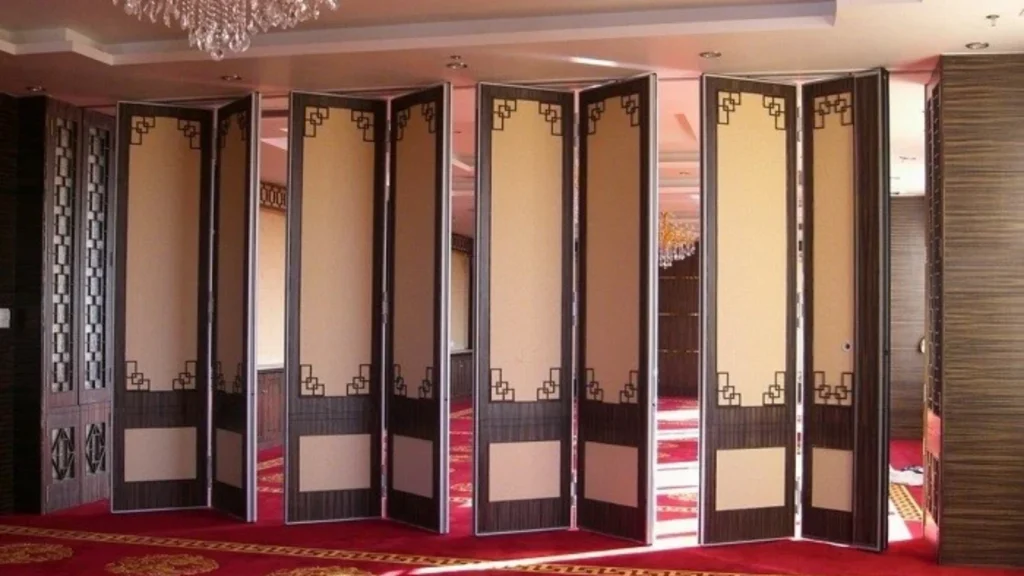
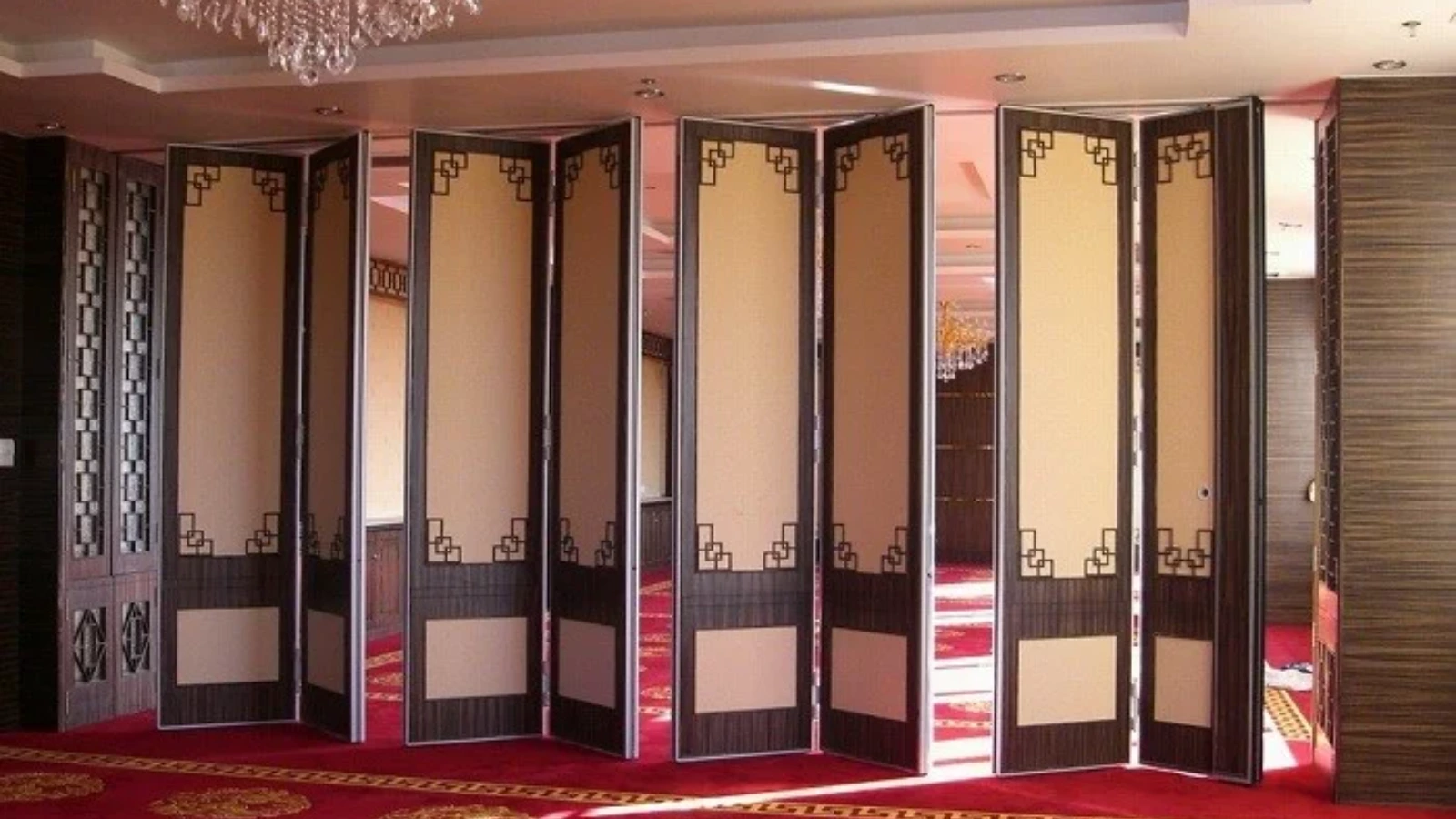
Movable wall panels are individually movable, suspended from a top track, cross the opening without a floor track and park at a planned stacking position. That description is a maintained product fact, but it does not tell you whether a specific route works in your building. The route must be reviewed against the layout, the overhead structure and the adjacent construction.
When an addendum changes the opening width, the turning point or the parking area, the route may need re-coordination. A continuous connected overhead route is required for every proposed movement path. If the addendum shows a new route, ask for a drawing that marks the full path from the closed position to the parking position.
Check stacking and adjacent trades
Parking style is customized to the customer layout and project requirements and may support compact stacking when the coordinated design permits it. Review the stacking position against doors, services, ceiling features and nearby finishes. If another trade needs access to that area, the addendum should say so.
Review Finishes Without Inferring Performance
Review focus: partition tender addenda.
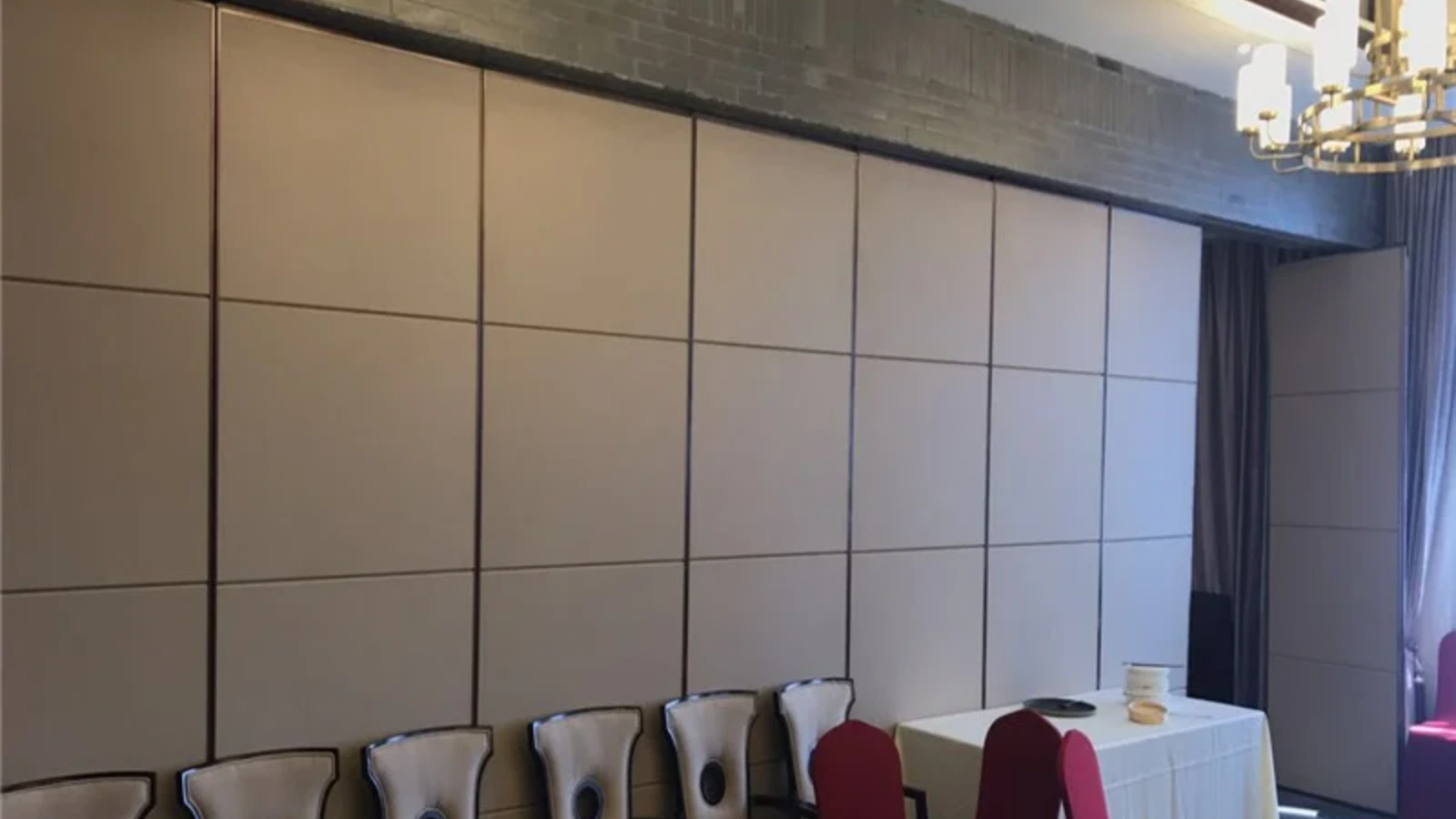
Confirmed finish options include laminate, melamine, fabric, leather, glass and other approved surfaces. An addendum may substitute one finish for another. The suitability of each route and parking arrangement depends on the approved layout, circulation, ceiling interfaces and operating sequence.
Confirm acoustic requirements with the project acoustic consultant and the supplier.
Separate visual evidence from performance evidence
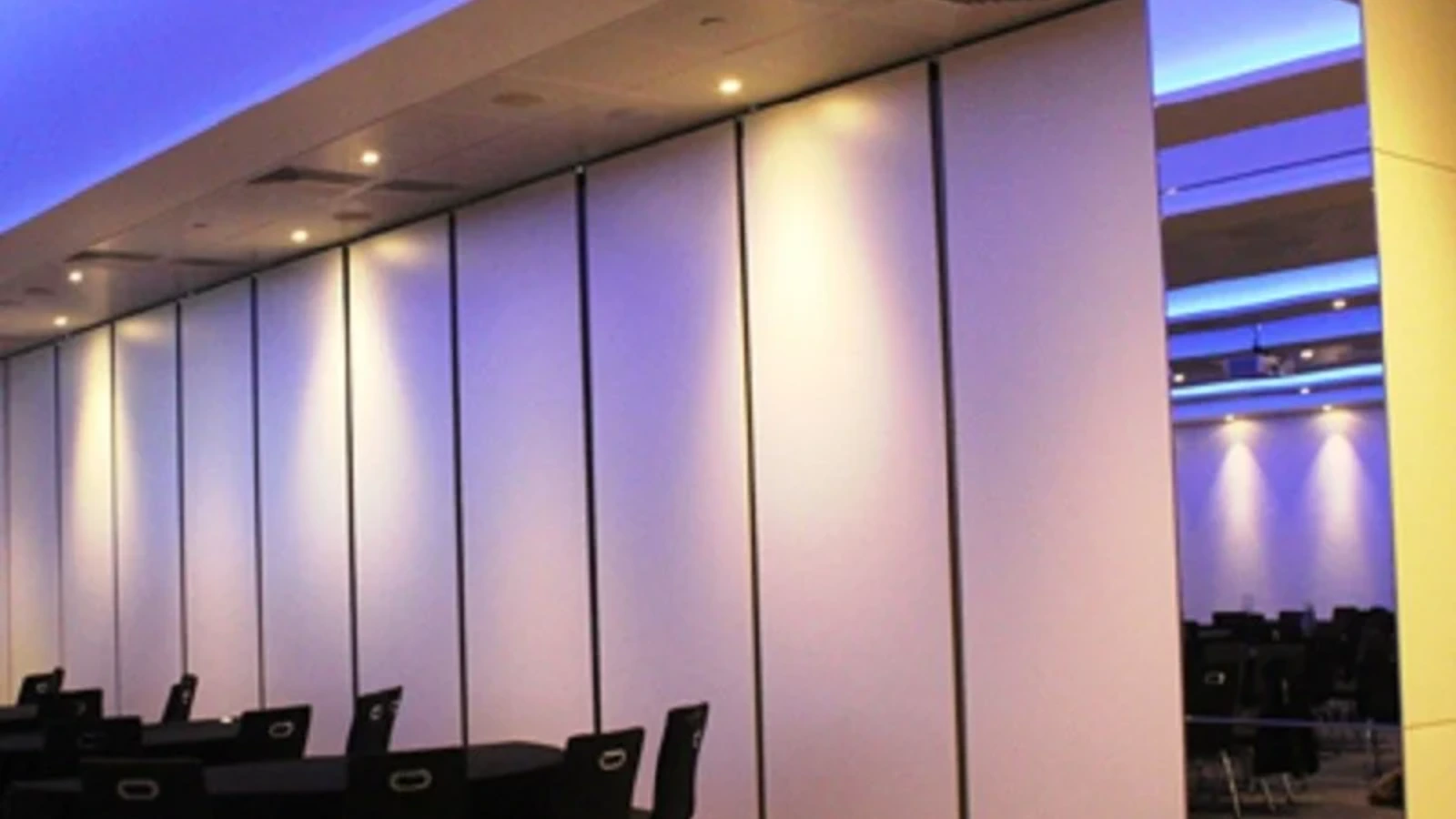
A photograph, finish sample or drawing can show appearance and geometry. Visible references can support layout discussion but do not verify hidden construction or performance. When an addendum relies on a visual reference, ask what separate evidence supports any performance requirement.
Use an Evidence Note for Unsupported Claims
The exact overhead route and support arrangement must be confirmed by the responsible project team from coordinated drawings. Comparative, absolute and causal statements require corresponding evidence. Otherwise, state the exact project-specific confirmation boundary and request the missing documentation.
This note is especially useful during tender clarification. It keeps the review focused on what is known and what must still be confirmed.
Coordinate Pass-Doors and Documentation
Pass-door requirements and project documentation can be discussed with the supplier. If an addendum introduces a pass-door, record where it is needed, how it relates to the panel layout and whether it affects the movement route or parking position. Do not assume a pass-door is included unless the tender documents say so.
Documentation should also cover the approved finish, the layout revision, the stacking position and any interface responsibilities. A clear document register reduces the risk that one addendum contradicts another.
Assign a single owner for addenda
One person should own the addenda register and circulate changes to the design, procurement and site teams. That owner should confirm that every affected drawing and schedule has been updated.
Decision Checklist Before You Price or Approve
- Is every addendum listed in the document register with a revision number?
- Has the movement route been checked against the latest layout?
- Is the parking position still coordinated with adjacent trades?
- Are all finishes among the confirmed options, or is a sample required?
- Are pass-door requirements clearly stated or excluded?
- Has the overhead support interface been referred to the project structural engineer?
- Are acoustic requirements confirmed by the project acoustic consultant?
- Is there a clear record of what remains open for project-specific confirmation?
Use this checklist before pricing, approving or releasing the package. It is a coordination tool, not a substitute for project-specific engineering or acoustic review.
Frequently Asked Questions
What is a partition tender addenda review?
It is a structured comparison of addenda against the original tender, drawings and schedules to identify scope changes, contradictions and missing information before pricing or approval.
How do I know if an addendum changes the movement route?
Check whether the addendum alters the opening, turning point or parking position. If it does, request a marked-up plan showing the full route from closed position to parking position.
Can a finish change in an addendum affect acoustic performance?
Confirm acoustic requirements with the project acoustic consultant and the supplier.
Do movable partitions need a floor track?
EBUNGE movable partition panels are top-hung and move without a continuous floor running track or floor hardware along the partition line.
What should I do if an addendum mentions a pass-door?
Record the requirement, check how it relates to the panel layout and movement route, and discuss the documentation with the supplier. Do not assume inclusion unless the tender documents state it.
When should I ask for project-specific confirmation?
Whenever an addendum touches support, acoustics, dimensions, finishes, movement routes or interfaces. These items depend on the complete project design and cannot be confirmed from a generic reference.
Conclusion and Next Step
A careful partition tender addenda review protects the project from hidden scope changes. Keep a document register, compare every addendum against the latest drawings, trace movement and parking routes, and separate visual references from performance evidence.
To discuss your layout, finish options, pass-door requirements or project documentation, contact the EBUNGE team. You can also review the movable partition walls range, explore flexible space solutions, or request a quote once your addenda review is complete.